
Scholars International Academy

Academics

arabic and islamic studies

Arabic and Islamic Studies in British Curriculum Schools in Sharjah

Families choosing an international school in Sharjah often assume that a British curriculum means an entirely British experience. In practice, every private school in the UAE works within a national framework that protects language, faith, and identity alongside the imported curriculum. Arabic and Islamic studies are not optional extras attached to the timetable, they are regulated components inside the school day. Understanding how these subjects are structured, assessed, and taught helps parents judge whether a school treats them as a genuine academic strand or a compliance exercise. How Arabic and Islamic Studies Fit Into a British Curriculum School A British curriculum school in Sharjah follows the English National Curriculum for core subjects while delivering nationally mandated subjects in parallel. There is no conflict between the two systems, but there is a design challenge: protecting enough teaching time for Arabic language education without compressing English, mathematics, or science. Strong schools treat the mandated subjects as full academic disciplines, with the same planning rigour, tracking, and reporting applied elsewhere. Weaker schools treat them as timetable fillers, and parents usually notice the difference within a term. What the Ministry of Education Requires The national requirements apply to all private schools regardless of curriculum, and they are the reason Arabic and Islamic studies appear on every school timetable in the emirate. 1. Arabic for Native Speakers Students of Arab nationality follow Arabic A, a first language programme covering grammar, literature, comprehension, and formal written expression. The expectation is fluency in Modern Standard Arabic, not conversational competence. 2. Arabic as an Additional Language Non Arab students follow Arabic B, a second language pathway building reading, listening, and speaking progressively from the early primary years. Placement depends on nationality rather than current ability, so schools must differentiate carefully inside each class. 3. Islamic Education for Muslim Students Muslim students study Islamic education throughout their schooling, taught in Arabic for Arab students and usually in English for non Arab Muslim students. The syllabus covers belief, worship, character, and Islamic history. 4. Moral and Social Studies All students, whatever their faith or nationality, follow the moral education and social studies strand covering ethics, citizenship, culture, and community values. Non Muslim students take this in place of Islamic education. Requirements are periodically updated by the authorities, so parents should confirm current arrangements directly with the school before enrolment. Why Arabic and Islamic Studies Matter Beyond Compliance The regulatory case is clear, but the educational case is stronger. Arabic is the language of the country a child is growing up in. A student who leaves school unable to read a contract, follow a news broadcast, or hold a professional conversation in Arabic is at a real disadvantage in a regional job market, however strong the English results are. Islamic studies carry a cultural literacy function beyond faith instruction. Students gain the historical and ethical context that shapes the society around them, which supports the intercultural understanding international curricula claim to develop. There is a cognitive argument too. Sustained bilingual study strengthens working memory, attention control, and the ability to switch between systems of thought. Far from diluting academic performance, serious Arabic and Islamic studies provision tends to support it. What Effective Teaching Looks Like Because the syllabus is largely fixed, the gap between schools in Arabic and Islamic studies appears in delivery. 1. Differentiated Grouping Arabic B classes often contain complete beginners alongside students with several years of exposure. Effective schools group by ability within the year level rather than teaching to the middle. 2. Language Used for Real Purposes Vocabulary retained is vocabulary used. Assemblies, displays, competitions, national day projects, and Arabic library reading turn a timetabled subject into a living language. 3. Transparent Assessment in Arabic and Islamic Studies Parents should receive the same clarity on progress here as in English or mathematics, including attainment levels, next steps, and the support offered when a student falls behind. How SIA Approaches Arabic and Islamic Studies Scholars International Academy delivers the mandated subjects as a fully integrated part of the British curriculum at SIA rather than as a separate track running alongside it. Arabic and Islamic studies teachers plan within the same academic framework, share assessment cycles, and report through the same channels as every other department. Foundations are built early. Within primary stage programme planning, Arabic begins as an oral and phonics led experience before moving into structured reading and writing, so students build confidence before they meet formal grammar. Cultural events, Arabic reading initiatives, and classroom displays extend the subject beyond the lesson, and families exploring learner life at SIA will see how language and values are reinforced across daily school routines rather than confined to one period on the timetable. Questions Parents Should Ask Before Enrolling A short visit reveals a great deal when the right questions are asked: Frequently Asked Questions Which school in Sharjah offers British curriculum education? Several private schools in the emirate deliver the English National Curriculum, and Scholars International Academy is among them. Rather than relying on a list, compare inspection outcomes, examination results at Key Stage 4 and 5, class sizes, and how well each school integrates Arabic and Islamic studies into its wider academic programme. Which is better, CBSE or British curriculum? Neither is objectively superior, since they serve different goals. CBSE is structured and content dense, closely aligned to Indian university entry and competitive examinations. The British curriculum emphasises subject specialisation from Year 10 onward, analytical writing, and coursework, feeding naturally into universities in the UK, Europe, and beyond. The better choice depends on where the family expects the child to study and how the child learns best. Is Arabic compulsory in the British curriculum? Not within the curriculum itself, but yes within the UAE. National regulations require all private schools to teach Arabic to every student through the compulsory years, with native and non native pathways determined by nationality. A British curriculum school in Sharjah therefore teaches Arabic alongside the English National Curriculum. Which schools in the

Arabic and Islamic Studies in British Curriculum Schools in Sharjah Read More »

stem education

STEM Education in Sharjah Schools

Parents comparing schools in Sharjah are asking a sharper question than a decade ago. Instead of asking which school produces the highest grades, they ask which school prepares a child for work that does not exist yet. That shift explains why STEM education has moved from an optional after school club to a central part of how strong schools design their curriculum. Understanding what it actually involves, and what separates a genuine programme from a marketing label, helps families make a far better decision. What STEM Education Really Means STEM stands for science, technology, engineering, and mathematics. The important word, though, is not any of the four subjects. It is the way they are connected. A school teaching these subjects in four separate silos is not delivering STEM education, it is delivering four traditional courses under a modern name. Real STEM learning asks students to solve a problem that requires more than one discipline at once. Designing a water filtration model calls on chemistry, measurement, material testing, and cost calculation in the same task. The student is not memorising a formula for an exam, but using it because the problem cannot be solved without it. Why STEM Education Matters in the UAE The national direction is not subtle. Investment in artificial intelligence, space, renewable energy, advanced manufacturing, and biotechnology has created a labour market where technical fluency is a baseline expectation rather than a specialisation. Employers increasingly filter candidates on the ability to work with data, prototype quickly, and communicate technical reasoning clearly. For families in Sharjah this matters because the emirate has built a dense research and university corridor. Students who arrive there with laboratory confidence, coding literacy, and real project experience compete on different terms than students who arrive with strong grades alone. What Strong STEM Education Looks Like in a Sharjah Classroom The gap between schools is rarely the equipment, it is how teaching is structured. Four markers separate a serious programme from a decorative one. 1. Inquiry Led Science Students begin with a question rather than a conclusion. They form a hypothesis, design the test themselves, record what happened, and explain why the result differed from the prediction. Failure becomes data instead of a lost mark. 2. Applied Mathematics Numbers are attached to a purpose. Ratio work appears inside a scale model, statistics inside a dataset the class collected, and algebra inside a design constraint. Mathematics stops feeling abstract because it is never presented alone. 3. Technology and Computational Thinking Coding is taught as a way of thinking, not a software tutorial. Students learn to break a large problem into steps, spot patterns, remove unnecessary detail, and debug their own logic. These habits transfer to every subject, including writing and analysis. 4. Engineering Design Challenges Students build, test, fail, and rebuild against a defined constraint such as budget, weight, or time. This cycle teaches resilience better than any assembly on the topic, because the feedback comes from the object itself rather than from a teacher. The Benefits of STEM Education Beyond Test Scores The academic case is well documented, but the wider benefits of STEM education are what parents notice first at home. Students become more comfortable with uncertainty and learn to defend a position with evidence rather than volume. They collaborate under pressure because most STEM activities are too large for one person to finish alone. They also develop what universities call intellectual persistence, the willingness to stay with a difficult problem long after the first attempt fails. There is a confidence dimension too. A student who has built something that works carries that memory into unrelated subjects. Success in these subjects tends to raise a child’s overall academic self image, which is why the effect often appears in humanities results too. How SIA Approaches STEM Education Scholars International Academy treats STEM as a way of teaching rather than a timetable block. 1. STEM Education Embedded in Everyday Lessons Enquiry, challenge, and independent thinking run through daily lessons across the school, supported by the High Performance Learning approach, which is built on the principle that advanced performance is developed rather than inherited. Students are expected to question, to justify, and to transfer a method learned in one subject into another context. 2. Assessment That Rewards Iteration Practical work is judged on reasoning and refinement, not only on whether the final result matched the expected answer. A project that failed for an understood reason is treated as evidence of learning. 3. A Framework Families Can Examine Parents usually start with the SIA 4X Advantage, which sets out the academic, personal, and future readiness pillars behind the school’s approach. The why us? section adds a clearer picture of how curriculum, teaching quality, and student support connect. How to Evaluate a STEM School in Sharjah When visiting a school, the most useful questions are practical ones: These five answers reveal more than any brochure or laboratory tour. Frequently Asked Questions Is STEM better than regular school? In most cases it is not a separate school type but an approach applied inside a mainstream curriculum. A strong school integrates STEM education alongside languages, humanities, and the arts rather than replacing them. Children benefit most from breadth combined with depth, so the better question is how well a school connects its subjects rather than which label it uses. What is the best special education school in Sharjah? There is no single answer, because the right school depends on the individual learning profile. Families should look for a documented inclusion policy, qualified learning support staff, individual education plans reviewed regularly, and teachers trained to differentiate within mainstream lessons. Meeting the inclusion team and asking how progress is measured tells you far more than any ranking list. What is the best age to start STEM? Early years. Sorting, building, predicting, and testing come naturally to young children, so structured STEM activities can begin in kindergarten in a simple, play based form. Formal coding and engineering design usually suit ages seven to

STEM Education in Sharjah Schools Read More »

transfer certificate

Transfer Certificate (TC) for Schools in Sharjah

Moving a child from one school to another is rarely simple, and the paperwork that follows can feel just as demanding. In the UAE, the most important document in that process is the transfer certificate, an official record issued by the school a student is leaving. Without it, the receiving school cannot confirm the student’s academic history, completed grade level, or eligibility to enroll. For families relocating to Sharjah, understanding how it works from the start saves weeks of delay and prevents a child from missing the opening days of a new term. What Is a Transfer Certificate and Why It Matters A transfer certificate, commonly shortened to TC and also known as a school leaving certificate, is a formal statement confirming that a student was enrolled, completed a specific grade, and left in good standing. It carries the student’s full name, date of birth, nationality, the curriculum followed, the last grade completed, the date of leaving, and the official stamp and signature of the principal. Education authorities treat it as proof of continuous schooling. It protects the student from being placed in the wrong grade and the receiving school from admitting a learner whose record cannot be verified, which is why nearly every list of school admission documents in the country treats it as mandatory rather than optional. When Families in Sharjah Need a Transfer Certificate Not every school move creates the same paperwork. Three situations account for most requests. 1. Moving Between Emirates Inside the UAE A family relocating from Dubai, Abu Dhabi, or Ajman to Sharjah moves between two regulators. Sharjah private schools operate under the Sharjah Private Education Authority, while Dubai schools fall under KHDA. The document remains valid nationwide, but the issuing school must complete and stamp it correctly before the student leaves. 2. Relocating from Outside the UAE Students arriving from abroad face the longest timeline, because the certificate must be attested in the country of origin before it is recognised locally. Starting this step before departure is the most practical move a relocating family can make. 3. Changing Curriculum or Grade Stage A move within the same emirate still requires full documentation when the curriculum changes, for example from a national system to an international one. The receiving school uses the record to confirm equivalence and correct placement. Documents Required Alongside the Certificate Schools rarely accept the certificate on its own. Most student transfer requirements in Sharjah pair the transfer certificate with the following paperwork: Requirements differ between institutions, so reviewing the published school policies before submitting anything prevents an incomplete file from being returned. How to Request a Transfer Certificate from the Current School The process is straightforward when it follows the correct order, since each step depends on the last. 1. Confirm the Withdrawal Date and Settle Obligations Notify the current school in writing of the intended last day of attendance. Outstanding tuition, transport charges, library books, and borrowed equipment must be cleared first, as schools may withhold the record until the account is settled. 2. Submit a Formal Written Request Complete the withdrawal form or send a signed letter from the parent or guardian stating the student’s name, grade, reason for leaving, and the destination emirate or country. Many schools ask for this one to two weeks in advance, and some require notice before the term ends. 3. Collect and Verify the Transfer Certificate Check every detail before leaving the counter. A misspelled name, an incorrect date of birth, or a missing signature will be rejected by the receiving school and the attestation authorities, and fixing it later is far slower than requesting a reprint immediately. Attestation and Equivalency in the UAE Documents issued inside the UAE are generally accepted between schools once they carry the school stamp and, where the regulator requires it, an authority endorsement. Certificates issued abroad follow a longer route: attestation by the education ministry in the issuing country, then by the UAE embassy there, and finally by the Ministry of Foreign Affairs in the UAE. Some cases also require Arabic translation by a licensed legal translator. Processing times vary by country and season, so begin attestation as soon as the decision to relocate is made. How SIA Supports Families Through the Process Scholars International Academy, part of the Scholars International Group network in Sharjah, guides families through document collection, verification, and grade placement rather than leaving them to navigate it alone. Parents can share scanned copies for a review that flags missing attestations or mismatched details early. Families who prefer to begin remotely can apply online to SIA and upload the paperwork at their own pace, while those who want a document by document walkthrough can contact the SIA admissions team directly. Either route ends with a clear checklist, a realistic timeline, and a confirmed placement date. Frequently Asked Questions How to apply for TC in UAE? Submit a written withdrawal request to the current school, clear any outstanding financial obligations, and ask the administration office to issue and stamp the document. Most schools process it within a few working days once the account is settled. How can I get a transfer certificate attestation in the UAE? For a certificate issued abroad, complete attestation in the country of issue through its education ministry and the UAE embassy, then present it to the Ministry of Foreign Affairs. For a locally issued document, the school stamp is usually sufficient, with the education authority endorsing it when required. How to request a transfer certificate? Notify the school in writing, ideally two weeks before the last day of attendance, stating the student’s name, grade, and reason for leaving. Settle all dues, then collect the stamped copy and verify the details immediately. What are the fees for a KHDA transfer certificate? KHDA regulates private schools in Dubai only, so its rules do not apply in Sharjah, where schools fall under the Sharjah Private Education Authority. Schools generally do not charge a separate government fee for issuing the document itself,

Transfer Certificate (TC) for Schools in Sharjah Read More »

british vs american curriculum

British vs American Curriculum in the UAE: Which Is Right for Your Child?

Choosing a school in the UAE often begins with a bigger question: which education system will suit your child best? The British vs American curriculum debate is one of the most common dilemmas parents face, as both systems are widely available and highly regarded across the country. Each offers a different structure, teaching style, and route to university. At Scholars International Academy (SIA) in Sharjah, families are guided through this decision with clear, balanced information so they can choose with confidence. This guide compares the two systems and explains what each one means for your child’s future. Understanding the British vs American Curriculum Choice The British vs American curriculum choice comes down to two well-established approaches to learning. The British system is known for subject depth and structured examinations, while the American system is valued for its breadth and flexibility. For many parents, choosing a curriculum is one of the most important early decisions in their child’s education, so understanding how each works is essential. The British Curriculum in the UAE The British Curriculum follows a clear, internationally recognized structure that moves from the Early Years through primary school, IGCSEs, and finally A Levels. Assessment is largely exam-based, with qualifications awarded by leading examination boards such as Cambridge and Pearson Edexcel. This is the British curriculum UAE families know well, prized for its rigor and the way its curriculum structure builds steadily towards specialized study. The American Curriculum Explained The American system takes a broader approach, with students studying a wide range of subjects and earning credits towards a high school diploma. Progress is tracked through a grade point average, or GPA, built up from continuous coursework, projects, and tests. Students may also sit the SAT and AP examinations to strengthen their university applications. Among the American curriculum schools Sharjah offers, this flexible, continuous assessment style appeals to learners who prefer variety over early specialization. Key Differences in the British vs American Curriculum While both systems prepare students well for higher education, several practical differences can guide your decision. The contrast lies mainly in structure, assessment, and the qualifications students graduate with. British vs American Curriculum: Structure and Assessment Style The clearest difference is how learning is organized and measured. The British curriculum structure encourages students to narrow their focus over time, leading to in-depth A Level study, with grades decided largely by final examinations. The American approach keeps subjects broad for longer and relies on a continuous assessment style, where everyday work contributes to the final result. Qualifications: IGCSE vs High School Diploma The qualifications gained also differ. The IGCSE vs high school diploma comparison reflects two routes to the same goal: the IGCSE leads towards A Levels, while the diploma is earned across the final school years. Similarly, the GPA vs A Levels distinction shows how the American GPA summarises ongoing performance, whereas A Levels reward focused achievement in chosen subjects. University Recognition for the British vs American Curriculum A common concern is whether one system offers better university recognition than the other. In practice, both are accepted by universities across the UAE, the UK, the United States, and worldwide. A Levels, the high school diploma, the SAT, and AP results are all valued by admissions teams, so students from either system can apply with confidence to leading institutions. Which Is the Best Curriculum in the UAE for Your Child? There is no single best curriculum in the UAE, only the one that fits your child. The British vs American curriculum decision should reflect how your child learns, where the family may live in the future, and the kind of university experience they hope for. A student who thrives on depth and clear structure may prefer the British route, while one who enjoys variety and steady progress may favor the American system. The British Curriculum at Scholars International Academy For families drawn to the British system in Sharjah, Scholars International Academy delivers it within a nurturing, ambitious community regulated by the Sharjah Private Education Authority (SPEA). Teaching is shaped by High Performance Learning, a research-based approach that helps every student aim high and develop the habits of successful learners. Parents weighing the British vs American curriculum options are warmly encouraged to explore the school’s Why Us information to see how SIA supports each child’s journey. Frequently Asked Questions Is the British curriculum harder than the American curriculum? Neither system is simply harder than the other; they are different. The British curriculum emphasizes depth and final examinations, which some students find demanding, while the American curriculum spreads assessment across the year and rewards consistent effort. The better fit depends on how your child prefers to learn and demonstrate what they know. Which curriculum is more recognized by universities? Both curricula are well recognized by universities around the world. A Levels and IGCSEs are widely respected, as are the high school diploma, GPA, SAT, and AP results. What matters most to admissions teams is strong achievement, regardless of which system a student has followed. Can my child switch between curricula in the UAE? Yes, many students move between systems, especially in the earlier years. Switching becomes more involved closer to examination stages, so it is best done with careful guidance from the school to ensure your child transitions smoothly and stays on track. Making the Right British vs American Curriculum Decision The British vs American curriculum decision is ultimately about your child, not about one system being better than another. Both open doors to excellent universities and rewarding futures, and both are well established across the UAE. At Scholars International Academy, families in Sharjah will find the guidance and support they need to choose the pathway that helps their child flourish.

British vs American Curriculum in the UAE: Which Is Right for Your Child? Read More »

btec vs a levels

BTEC vs A-Levels: Choosing the Right Pathway After GCSE

Once a student completes their GCSEs, one of the biggest decisions ahead is which qualification to study next. The BTEC vs A Levels question sits at the heart of this choice, and it can shape a young person’s university options and future career. Both routes are well respected, yet they suit very different learning styles and ambitions. At Scholars International Academy (SIA), students and parents are supported to weigh up these post-GCSE options carefully, so that every learner moves into the right programme with confidence. Understanding the BTEC vs A Levels Decision The BTEC vs A Levels decision is essentially a choice between two proven approaches to learning. A Levels follow a traditional academic path built around examinations, while BTEC qualifications focus on applied, hands-on study assessed largely through coursework. Understanding what each one involves is the first step towards a confident decision. What Is a BTEC? So, what is BTEC? A BTEC is a vocational qualification developed by Pearson BTEC and built around applied learning, real-world skills, and career-focused study. Studied most commonly at BTEC Level 3, it is widely regarded as equivalent to A Levels and is graded through continuous coursework, projects, and practical assessment rather than a single set of final exams. This makes it a strong fit for students who thrive when learning is connected directly to practice and to the demands of a future profession. What Are A Levels? A Levels are academic qualifications usually studied in three subjects over two years. They are assessed mainly through final written examinations and reward depth of subject knowledge, strong analytical skills, and independent study. For students who enjoy academic challenge and have a clear subject focus, A Levels remain a trusted and flexible choice. They also develop the essay-writing and examination techniques that many traditional degree courses continue to expect. Key Differences: BTEC vs A Levels While both qualifications open doors to higher education, the differences between them matter a great deal when making a decision. The contrast is really about how students learn best and where they want to go next. BTEC vs A Levels: Coursework vs Exams The clearest difference between the two qualifications is assessment. BTEC programmes rely on coursework, assignments, and projects completed throughout the year, while A Levels concentrate on final exams. This is the core of the wider debate around vocational vs academic qualifications: one rewards steady, applied progress, and the other rewards exam performance. UCAS Points and University Acceptance Both qualifications earn UCAS points, the tariff used by UK universities to compare applications. A top BTEC Level 3 grade can carry the same UCAS points as high A Level grades, which is why university acceptance is strong for both routes. Universities worldwide increasingly value the applied skills a BTEC develops alongside the academic rigour of A Levels. BTEC Qualification UAE: What It Means for Students Here A BTEC qualification UAE students complete is recognised both regionally and internationally, giving families confidence wherever their child hopes to study. Private schools in the emirate are regulated by the Sharjah Private Education Authority (SPEA), which safeguards educational standards across the Sixth Form. Exploring BTEC at SIA alongside academic routes helps students and parents see how a strong Sixth Form can support every kind of learner. How to Choose Between BTEC vs A Levels There is no single right answer to the BTEC vs A Levels question; the best choice depends on the individual student. Learners who enjoy continuous projects and practical application often flourish with a BTEC, while those who prefer academic subjects and exams may lean towards A Levels. Some students even combine the two, studying a BTEC alongside one or more A Levels to keep their options broad. Career goals, preferred learning style, and university plans should all guide the decision. It often helps to talk both options through with subject teachers and to reflect honestly on the style of study that has motivated the student most so far. Choosing the Right Pathway at Scholars International Academy Selecting the right route is far easier with expert guidance. Scholars International Academy offers a supportive Sixth Form in Sharjah that builds on the Secondary Stage, helping students transition smoothly into advanced study. With experienced teachers, careful subject advice, and a focus on each learner’s strengths, SIA makes the BTEC vs A Levels choice clearer and ensures students are well prepared for university and beyond. Frequently Asked Questions Is a BTEC equivalent to A-Levels? Yes, a BTEC Level 3 is widely accepted as equivalent to A Levels. A full BTEC is broadly comparable to studying multiple A Levels, and it carries UCAS points that universities recognise when making offers, so students are not at a disadvantage when they apply. Can I go to university with a BTEC? Absolutely. Many universities in the UAE, the UK, and around the world accept BTEC qualifications for entry, particularly when paired with strong grades. BTECs are especially valued for degree courses linked to their subject area, where applied skills give students a real head start. Should my child choose BTEC or A-Levels? The right choice depends on how your child learns best and what they hope to study at university. A learner who enjoys coursework and practical projects may prefer a BTEC, while one who excels in exams and academic subjects may choose A Levels. The BTEC vs A Levels decision is best made with guidance from teachers who know the student well. Making a Confident Choice: BTEC vs A Levels There is no universally better option in the BTEC vs A Levels debate, only the option that is right for each student. Both lead to university and rewarding careers, and both are respected by employers and admissions teams alike. At Scholars International Academy, families in Sharjah will find the guidance, teaching, and encouragement needed to choose the pathway that lets every young person thrive.

BTEC vs A-Levels: Choosing the Right Pathway After GCSE Read More »

a levels uae

A Levels UAE : Subjects, Grades & University Pathways

For ambitious students in Sharjah, the years spent studying A Levels UAE families trust can open doors to leading universities around the world. As one of the most widely recognised academic qualifications, A Levels give young people the depth of knowledge, independent study skills, and globally respected grades that universities look for. At Scholars International Academy (SIA), the Sixth Form programme is designed to guide students through this important stage with expert teaching and personalised support. This guide explains the subjects on offer, how grades work, and the university pathways that A Levels open up. Understanding A Levels UAE: Structure and Stages A Levels, formally known as GCE A levels, are advanced-level qualifications usually studied over two years. The A Levels UAE pathway mirrors the structure used in the United Kingdom, with many schools following Cambridge International A levels or equivalent examination boards. Students typically specialise in three or four subjects, allowing them to build genuine expertise in the areas most relevant to their future university and career plans. AS and A2 Levels Explained The programme is divided into two parts: AS and A2 levels. The AS year covers the first stage of study, while the A2 year builds on this with more advanced content. Together, AS and A2 levels combine to form the full A Level grade, giving students a clear sense of progress as they move through the course. Sixth Form, the Secondary Stage and Year 12 to Year 13 A Levels are studied during the Sixth Form, which follows the Secondary Stage of schooling and covers Year 12 and Year 13. This period marks a shift towards greater independence, with students taking more responsibility for their own learning. Families exploring Sixth Form Sharjah options will find that a strong Sixth Form programme balances academic challenge with the guidance young people need to thrive. Choosing the Right A Level Subjects Selecting A level subjects is one of the most important decisions a student will make, as these choices shape both university applications and long-term career options. Popular A Level Subjects and Combinations Sciences such as Biology, Chemistry, and Physics pair naturally with Mathematics, while Economics, Business, and Psychology suit students drawn to commerce and social sciences. Humanities and creative subjects round out a broad and flexible selection of A level subjects, ensuring every learner can follow their strengths and interests. Matching A Levels UAE Subjects to Future Goals Aligning subject choices with a clear ambition is where the A Levels UAE approach proves especially valuable. A student aiming for medicine, engineering, law, or finance can select the precise combination universities expect, turning two years of study into a focused step towards a chosen degree. Grades, Grade Boundaries and Examination Results A Levels are graded from A* down to E, with each grade reflecting a level of mastery in the subject. Grade boundaries the marks needed for each grade are set by examination boards and can vary slightly between subjects and sessions. When Examination Results are released, these grades become the basis for confirming university places, so understanding how A Levels UAE grading works helps families plan with confidence. University Pathways and Entry Requirements One of the greatest strengths of A Levels is the range of higher education pathway options they unlock, both within the region and internationally. A Levels UAE graduates regularly progress to universities in the United Kingdom, United States, Canada, Australia, and across the Gulf. Applying Through UCAS For students aiming at British universities, the UCAS application is the central route. Offers are usually made based on predicted grades and a personal statement, with final places confirmed once results are published. A well-supported UCAS application can make a real difference to the final outcome. University Entry Requirements in the UAE When it comes to university entry requirements UAE institutions typically recognise A Levels for direct entry, often alongside an equivalency certificate. Strong grades also strengthen university admissions prospects for competitive programmes, both locally and abroad. Why Scholars International Academy for A Levels UAE Choosing the right school is as important as choosing the right subjects. Scholars International Academy offers a well-established Sixth Form within a supportive British curriculum community in Sharjah, regulated by the Sharjah Private Education Authority (SPEA). With experienced subject specialists, a broad range of A Level options, and dedicated university guidance, SIA helps students make the most of the A Levels UAE experience and approach their next steps with genuine confidence. Frequently Asked Questions How many A-Levels should my child take? Most students take three A Levels, which is the standard number required by the majority of universities. Some choose to study four, particularly if they are aiming for highly competitive courses or want to keep their options open, though quality and strong grades usually matter more than quantity. Are A-Levels accepted by universities worldwide? Yes. A Levels are recognised by universities across the world, including in the UK, United States, Canada, Australia, Europe, and throughout the Gulf. Their international reputation for academic rigour makes them one of the most portable and respected qualifications a student can hold. What is the difference between AS and A2 levels? AS levels represent the first year of study and can stand alone as a qualification, while A2 levels cover the second, more advanced year. When combined, the AS and A2 levels make up the complete A Level grade awarded at the end of the two-year programme. Making the Most of A Levels UAE Opportunities The A Levels UAE journey is far more than a set of examinations; it is a launchpad towards university and a rewarding career. With the right subject choices, strong grades, and dedicated guidance, students leave the Sixth Form ready for the next chapter. At Scholars International Academy, families in Sharjah will find a nurturing environment where every learner is supported to reach their full potential.

A Levels UAE : Subjects, Grades & University Pathways Read More »

Early Years Foundation Stage

Early Years Foundation Stage in Sharjah: A Parent’s Guide to EYFS

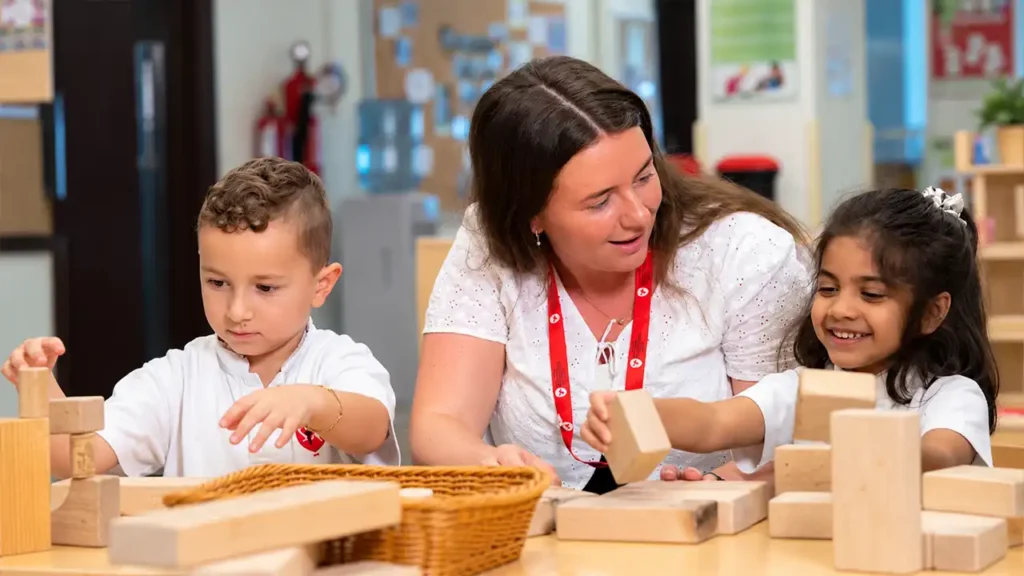
Choosing where your child takes their very first steps in education is one of the most important decisions a parent will make. For families in the emirate, the Early Years Foundation Stage offers a trusted, internationally recognised framework that shapes how young children learn, play, and grow during their earliest school years. At Scholars International Academy (SIA), this approach forms the foundation of a nurturing British curriculum environment built around each child’s curiosity and confidence. This guide explains what the EYFS involves, how it supports early childhood development, and what parents in Sharjah can expect when their little ones begin school. Understanding the Early Years Foundation Stage The Early Years Foundation Stage is the statutory framework used across British curriculum schools to guide the care and education of children from birth to five years old. It sets clear standards for learning, development, and welfare, ensuring that every child receives a consistent, high-quality start regardless of where they study. Rather than focusing on formal lessons and tests, the early years are designed around exploration, play, and meaningful interaction with caring adults. The EYFS Curriculum and Early Childhood Development The EYFS curriculum is built on the understanding that the first five years are the most significant period for early childhood development. During this time, children form the cognitive, social, and emotional foundations that influence their entire educational journey. A well-structured programme balances adult-guided activities with child-initiated discovery, allowing each child to progress at a pace that suits their individual needs and interests. Early Years Education in the UAE and Sharjah Demand for high-quality early years education in the UAE has grown rapidly as families seek British curriculum settings close to home. For many parents comparing early years education UAE options, the priority is a nurturing setting that blends strong academic foundations with genuine warmth. A reputable nursery school in Sharjah follows the same internationally benchmarked standards found in the United Kingdom, while reflecting the diverse, multicultural community of the region. Private schools across the emirate are regulated by the Sharjah Private Education Authority (SPEA), which oversees educational quality and child welfare to give parents added confidence in their choice. The Seven Areas of Learning in the Early Years Foundation Stage The curriculum is organised around seven connected areas of learning. Together, they ensure that young children develop holistically rather than in isolated subjects, with each area supporting the others. Prime Areas: Communication, Physical, and Emotional Growth The three prime areas are essential for all later learning. Communication and language development helps children express themselves, listen carefully, and build vocabulary through conversation and storytelling. Physical development supports movement, coordination, and healthy habits, while personal, social and emotional development nurtures confidence, positive relationships, and self-regulation. These prime areas underpin everything a child goes on to achieve. Specific Areas and Learning Through Play The four specific areas literacy, mathematics, understanding the world, and expressive arts and design build on the prime foundations. Early literacy introduces children to sounds and letters through structured synthetic phonics programmes such as Read Write Inc, gently preparing them for reading and writing. Across every area, learning through play remains central, turning everyday moments into rich opportunities for discovery, problem-solving, and creativity. Foundation Stage 1 (FS1) and the Early Nursery Years For many children, formal early years schooling begins with Foundation Stage 1 (FS1), often known to parents as the first nursery or pre-school year. At this stage, the emphasis is on settling in, building friendships, and developing independence in a safe and welcoming environment. Whether referred to as a nursery or a kindergarten Sharjah setting, the aim remains the same: to help each child feel secure enough to explore and learn. Families interested in joining can find clear guidance through the school’s Nursery Admissions process, which is designed to make the transition smooth for both children and parents. How the Early Years Foundation Stage Builds School Readiness One of the greatest strengths of the EYFS is its focus on school readiness. Rather than rushing children into academic work too soon, it gradually develops the skills they need to thrive in primary school concentration, communication, resilience, and a genuine love of learning. By the end of this stage, children are assessed against a set of early learning goals that confirm they are well prepared and excited for the next step in their education. Choosing the Right Early Years Setting in Sharjah Selecting an early years programme is about far more than location. Parents should look for qualified early years practitioners, a clearly structured Early Years Foundation Stage programme, strong communication between home and school, and an environment where children are genuinely happy. Scholars International Academy combines experienced educators with a purpose-built early years setting, giving children a confident start within a supportive British curriculum community. Parents who would like to see the learning environment first-hand are warmly encouraged to Book a Tour of the campus before making their decision. Frequently Asked Questions What age does the Early Years Foundation Stage start? The Early Years Foundation Stage begins from birth and continues until a child turns five, covering the nursery and reception years. In most school settings in Sharjah, children join their first structured early years class between the ages of three and four, though provision can begin earlier depending on the nursery. Is EYFS the same as nursery or kindergarten? EYFS is the educational framework, while “nursery” and “kindergarten” are the everyday names parents use for the settings where it is delivered. In practice, a nursery or kindergarten follows the EYFS standards to shape what and how children learn, so the terms describe the same stage of education from slightly different angles. How does EYFS prepare my child for primary school? EYFS prepares children for primary school by developing the language, social, physical, and early academic skills they will rely on in Year 1. Through play-based learning and gentle daily routines, children build the confidence, independence, and curiosity that make the move into formal schooling feel natural and exciting rather

Early Years Foundation Stage in Sharjah: A Parent’s Guide to EYFS Read More »

igcse vs gcse uae

IGCSE vs GCSE UAE: Which Qualification Wins in 2026?

If you are a parent in the UAE trying to understand the difference between IGCSE and GCSE, you are not alone. The confusion makes sense because both are British qualifications, both can lead to A Levels, and both are recognized internationally. So what is the actual difference, and which one matters more for your child? The IGCSE vs GCSE UAE debate comes up often, especially around Year 8 and Year 9, when subject choices begin to shape your child’s academic path. This article breaks it down clearly, without unnecessary jargon, so you can make a decision based on facts, not assumptions. Understanding the Two Qualifications GCSE, the General Certificate of Secondary Education, is taken by students in England at the end of Year 11. IGCSE, the International General Certificate of Secondary Education, is its international counterpart, designed for students outside the UK. Both qualifications carry weight with universities and employers. The difference is not about one being better than the other; it is about design, assessment style, and accessibility. In the UAE, most British schools offer IGCSEs because the IGCSE vs GCSE UAE context often makes the international version more practical for students studying outside the UK. How the Examinations Differ Here is where parents start seeing the real difference: GCSE examinations in England now rely mostly on final exams, while coursework has been removed from many subjects. IGCSEs, depending on the exam board and subject, can still offer a mix of coursework and final exams. For many students, that flexibility can be a real advantage. A child who struggles under high-pressure exams but performs well in project-based work may do better with an IGCSE pathway. This is why IGCSE vs GCSE UAE differences matter: the assessment model can shape your child’s confidence at a critical academic stage. University Recognition: Do Universities Care? The short answer is no, university recognition for IGCSEs is generally on par with GCSEs around the world. UK universities, US colleges, and institutions across Europe, Australia, and Canada accept both qualifications without preference. The Russell Group also treats them as equivalent for entry requirements. Where it gets more detailed is grading, GCSEs use a 9 to 1 scale, while IGCSEs often use A* to G, although some exam boards may use different grading systems. From a university standpoint, the IGCSE vs GCSE UAE question is mostly neutral, neither qualification gives your child a clear advantage or disadvantage. IGCSE Subjects and Choosing the Right Combination One of the biggest advantages of the IGCSE system is subject breadth, IGCSE subjects can cover everything from core sciences and mathematics to Global Perspectives, Business Studies, Computer Science, and creative arts. The key is choosing a balanced combination, not just picking what seems easy. Students need a mix that keeps future pathways open while still playing to their strengths. At Scholars International Academy, the subject selection process is guided and strategic; you can explore the full range on the IGCSE subject page. Most schools recommend 7 to 9 subjects; fewer subjects can limit university options, while taking too many can spread a student too thin. Exam Boards: What Parents Need to Know When people say IGCSE, they usually mean Cambridge International Examinations, CAIE, the original creator of the IGCSE. But Edexcel, Pearson, also offers an International GCSE, which is technically a different qualification with its own syllabus. Both exam boards are well respected, but they are not identical. Understanding IGCSE vs GCSE UAE also means knowing which exam board your school uses, because the syllabus, marking criteria, and grade boundaries can differ. Cambridge as an Exam Board Choice Cambridge tends to be more widely used internationally, and it often offers a broader global perspective in subjects such as History and Geography, which can suit the international student body across UAE schools. For families weighing the IGCSE vs GCSE UAE decision, Cambridge is often the default choice, but default does not mean automatic, the exam board should fit the subject and the teaching expertise behind it. Edexcel as an Exam Board Choice Edexcel is popular because its content aligns closely with the UK GCSE, and its structure can feel familiar to UK trained teachers. Cambridge IGCSE vs Edexcel cambridge igcse vs edexcel is a smaller debate within the larger conversation. Cambridge often offers a broader international perspective, while Edexcel follows a structure that may feel more familiar to UK trained teachers. Neither option is objectively better; the right choice depends on the subject, the teaching expertise, and your child’s strengths. The Secondary Stage and Why It Matters The IGCSE years, typically Years 10 and 11, are part of the Secondary Stage, and they represent a real turning point in your child’s education. Learning shifts from broad exposure to more focused, exam-driven study, and the way a school handles this transition can directly affect student results. Look for schools that develop genuine understanding, not just schools that teach to the test. IGCSE Schools Sharjah IGCSE Schools Sharjah offer families internationally recognized British qualifications, often at lower fees than equivalent schools in Dubai. IGCSE delivery in Sharjah has improved significantly in recent years, with more schools investing in specialist teachers, stronger subject guidance, and focused exam preparation. O-Level Schools Sharjah O-level schools Sharjah is a term some parents still use, but it usually refers to the same IGCSE pathway. O Levels came before GCSEs and IGCSEs, and while the name is still used informally, the modern equivalent is the IGCSE. So if you are searching for O-Level schools, you are most likely looking for IGCSE programs. GCSE Curriculum UAE The GCSE curriculum in the UAE landscape is mostly IGCSE-based. Very few schools in the Emirates offer the England-specific GCSE, because the IGCSE is designed for international contexts, with content that reflects global perspectives rather than only British ones. For UAE families, IGCSE is often the more natural and practical choice. What Comes After: The Sixth Form Pathway IGCSEs are the foundation, not the final step. The results your child achieves at IGCSE can directly

IGCSE vs GCSE UAE: Which Qualification Wins in 2026? Read More »

what is high performance learning

What is High Performance Learning? HPL Explained

Most schools teach children what to learn, very few teach them how to learn, and even fewer build a full system around it. That is exactly why what is high performance learning matters, and why more UAE parents are asking this question before choosing a school. So what is high performance learning, it is an evidence based framework built on 30 years of cognitive research, and it is founded on one clear belief, every child can achieve high performance, not only the gifted ones. It builds the right conditions for all students to think, perform, and develop at a high level, and while that may sound like common sense, very few schools actually operate this way. Advanced Cognitive Performance: Teaching Students to Think At the heart of HPL is Advanced Cognitive Performance, the idea that students can be taught to think at higher levels through a clear and structured approach. This is not rote memorisation or exam drilling, it is meta cognition, critical analysis, creative problem solving, and the ability to connect ideas across different subjects. So what does what is high performance learning look like in practice, a Year 4 student is not just learning fractions, they are learning how to approach unfamiliar problems, evaluate their own thinking, and transfer strategies between subjects. That toolkit stays with them long after they have forgotten the specific maths problem. Learner Mindset: The Part That Changes Everything Academic ability means little without the right learner mindset, HPL places equal emphasis on how students see themselves as learners, whether they believe intelligence is fixed, or that effort, strategy, and reflection can drive improvement. This is where HPL separates itself from traditional education, it deliberately develops resilience, intellectual curiosity, and self regulation. A child with a strong learner mindset does not fall apart after a poor test result, they analyse what went wrong, adjust their approach, and try again. That mindset is taught, practised, and reinforced, not left to chance. Growth Mindset: Why It Isn’t Enough on Its Own You have probably heard the growth mindset everywhere, it has become a phrase that almost every school claims to promote. Here is my honest take: a growth mindset alone is not enough, telling a child that they can do it if they try harder means very little if they do not have the thinking tools to actually improve. So what is high performance learning doing differently, it pairs the growth mindset philosophy with a structured framework of thinking skills and learner attributes. The belief that you can improve is only the starting point, HPL gives students the actual methodology to improve with confidence. VAAs, The Values, Attitudes, and Attributes Behind Performance The hpl framework identifies a set of VAAs, Values, Attitudes, and Attributes, that high performing learners consistently show, including empathy, confidence, collaboration, and intellectual risk taking. What makes this genuinely powerful is that it becomes measurable, instead of hoping students somehow develop good character, HPL defines what these attributes look like in the classroom, and gives teachers a clear framework to develop them with purpose. You can see how Scholars International Academy integrates this into its philosophy on the Why Us page. ACPs: The Cognitive Skills That Set Students Apart Alongside VAAs, HPL defines ACPs, Advanced Cognitive Performance characteristics, these are the thinking skills that separate high performing students from average ones, including meta thinking, linking ideas across subjects, intellectual confidence, creative and critical thinking, and precision in analysis. What is High Performance Learning without ACPs, it becomes just another philosophy, but ACPs make HPL practical. Teachers embed these skills into every lesson, not as an add on, but as the way learning happens every day. 21st Century Skills, Built In, Not Bolted On Parents often hear about 21st century skills, collaboration, communication, creativity, and critical thinking, but the problem is that many schools treat these skills as extracurricular add ons, not core learning outcomes. HPL changes that, because what is high performance learning if not a framework that builds these skills through the curriculum, not beside it. When a student analyses a historical event from different perspectives, they are building critical thinking, empathy, and communication at the same time. Integrated, not added later. HPL Framework The HPL framework is built on two pillars, ACPs, the cognitive skills, and VAAs, the personal attributes. Together, they create a clear model of what high performance looks like, and how schools can develop it in every student. It is not a curriculum replacement, it is a lens that improves the way any curriculum is delivered. You can explore the full framework on the High Performance Learning (HPL) page. High Performance Learning Schools UAE High performance learning schools UAE are part of a growing global network of HPL World Class Schools, accredited by the HPL organisation for showing that their teaching, assessment, and school culture genuinely reflect the philosophy. UAE parents are increasingly looking for HPL accredited schools because the framework offers something measurable, not just a broad promise. HPL Methodology The HPL methodology trains teachers to embed ACPs and VAAs into lesson planning and classroom delivery. At the classroom level, this means a teacher does not only ask, what is the answer, but also asks, how did you get there, and what else could you have tried. Every interaction is designed to stretch thinking, build confidence, and help students become more aware of how they learn. HPL vs Traditional Curriculum HPL vs traditional curriculum is not really an either or comparison, HPL does not replace the British curriculum, the IB, or any other system, it enhances it. A traditional curriculum tells schools what to teach; HPL helps teachers understand how to teach it, so every student, not only the top 10 percent, has the chance to reach advanced performance. FAQ How Does HPL Work? HPL embeds two sets of characteristics into everyday teaching: ACPs, advanced thinking skills, and VAAs, values and attitudes. Teachers develop these in every lesson, so students do not just absorb content; they

What is High Performance Learning? HPL Explained Read More »

How to choose a British school in Sharjah

How to Choose a British School in Sharjah: 7 Steps

Let me be honest with you, How to choose a British school in Sharjah is not something you can decide from a brochure alone, every school can look impressive on paper, with polished photos, strong promises, and the same world class education language that parents see everywhere. As a parent, you need to look deeper, you need a simple method that helps you compare schools clearly, understand what really matters, and choose with confidence. If you are researching how to choose a British school in Sharjah, this guide gives you a clear 7-step framework, so you can make a decision you feel comfortable with, not one you keep questioning later. Step 1: Check the School’s Accreditation Before anything else, before the campus, fees, or extracurriculars, check the school’s accreditation; this tells you whether the school has been independently reviewed against recognized standards. In Sharjah, schools operate under the Sharjah Private Education Authority, SPEA, and beyond local regulation, strong British schools often hold international accreditation from bodies such as BSO, British Schools Overseas, or COBIS. If a school has no external accreditation, parents should treat that as a warning sign. Schools like Scholars International Academy are transparent about their credentials, and you can explore their values and accreditation on the Why Us page. Step 2: Understand the Curriculum Deeply Not all British schools deliver the same curriculum, some follow the National Curriculum of England, others use Cambridge International, and some blend both, these differences matter because they affect the qualifications your child graduates with and how universities view them. Ask specific questions, does the school offer GCSEs, A Levels, or IGCSEs, what subjects are available at Key Stage 4 and Key Stage 5, a school that limits subject choices at senior level can limit your child’s future options, and that is not something parents should discover in Year 10. Understanding How to choose a British school in Sharjah starts with knowing what version of British education the school actually delivers. Step 3: Evaluate Teacher Quality This is where many parents do not dig deep enough, teacher quality is one of the biggest factors in your child’s educational experience, more important than facilities, technology, or the building itself. Ask directly, what percentage of teachers are UK qualified, what is the average teacher tenure, and how stable is the teaching team. High teacher turnover is a warning sign, it usually means something is wrong with management, compensation, or culture, while stable and experienced staff create the consistency children need to learn, grow, and feel secure. Step 4: Read the School Inspection Reports Every regulated school in the UAE goes through a school inspection, in Sharjah, SPEA conducts inspections and publishes public reports that can tell you far more than a school tour alone. Look for trends across more than one year, is the school improving, staying the same, or declining, a single strong year means little if the overall direction is not moving forward. When choosing a school in Sharjah, inspection reports should be one of your first research stops, not the school’s Instagram page, the report covers teaching quality, student outcomes, leadership, and safeguarding, real data, not marketing. Step 5: Understand the SPEA Rating and BSO Rating Two rating systems matter when comparing British schools in the UAE, the KHDA rating applies mainly to Dubai schools, so parents in Sharjah may use it as a benchmark, but KHDA does not regulate Sharjah schools. The BSO rating applies to schools inspected under the British Schools Overseas framework, and a strong BSO rating means a school has been evaluated against standards aligned with schools in England. Not every school in Sharjah holds a BSO rating, so when a school does, it can be a real differentiator. Finding the best school for my child Sharjah is not about choosing the highest rated school on a list, it is about matching the school’s strengths to your child’s needs. A school rated strong in academics but weaker in wellbeing may not suit a child who needs strong pastoral care, ratings are a guide, not a final verdict. Step 6: Assess Learning Outcomes and Performance Frameworks What are students actually achieving, learning outcomes are one of the clearest indicators of whether a school’s promises turn into real results, so look at exam pass rates, university placement data, and value added scores where available. Some schools go beyond the standard curriculum with frameworks like High Performance Learning (HPL), which helps develop advanced cognitive and interpersonal skills, not exam results alone. The school selection criteria UAE parents should prioritise include academic outcomes, accreditation status, teacher credentials, inspection history, and the school’s approach to the whole child. Fees matter, but they should not be the first filter, How to choose a British school in Sharjah comes down to understanding what really drives quality, and outcomes sit near the top. Step 7: Visit the School, But Visit Smart This is where everything comes together, How to choose a British school in Sharjah ends with a campus visit, but do not just take the guided tour and leave impressed by the science lab. Watch how teachers interact with students, look at the wall displays, are they student generated or only decorative, sit in on a lesson if you can, and talk to parents in the pickup line, not only the admissions team. The feel of a school tells you what no website can. So what to look for in a British school, five things matter most, verified accreditation, a rigorous curriculum, qualified and stable teaching staff, strong inspection results, and genuine evidence of student achievement. Everything else, the pool, the robotics lab, and the uniform, comes second. FAQ What Should I Look for in a School? Start with accreditation, curriculum structure, and teacher quality, then look at inspection reports, learning outcomes, pastoral care, and how the school communicates with parents. Done right, How to choose a British school in Sharjah means looking beyond appearance and focusing on substance. How Do I Know

How to Choose a British School in Sharjah: 7 Steps Read More »

hidden link hidden link hidden link hidden link hidden link hidden link hidden link hidden link hidden link hidden link hidden link hidden link hidden link hidden link hidden link hidden link hidden link hidden link hidden link