
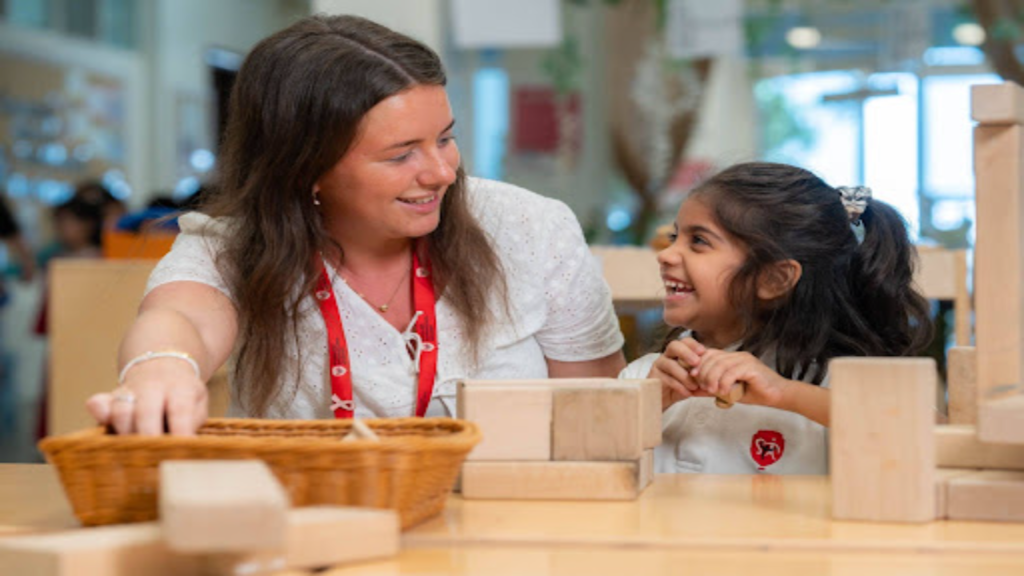
A growth mindset for kids is the belief that ability grows through effort, good strategies and help from others. Children who hold it attempt harder tasks, recover faster from mistakes and keep going when progress is slow. This guide covers what it looks like, which words help, and how to build it from the Early Years through Primary.
What Is a Growth Mindset?
The term comes from Stanford psychologist Carol Dweck. With a fixed mindset, a child sees ability as something you either have or lack, so a low mark feels like a final verdict. With a growth mindset, the same child reads that mark as information about what to practise next.
Most children hold a mix of both, often depending on the subject. A child may approach football with patience and maths with dread. That is why mindset can be taught: it is shaped by what adults say, praise and model every day.
Fixed vs Growth Mindset Examples
Children reveal their mindset in the way they talk about challenge. These fixed vs growth mindset examples show the difference in everyday school moments:
| Situation | Fixed mindset | Growth mindset |
|---|---|---|
| A new maths topic | “I’m just not a maths person.” | “I don’t understand it yet. Which step am I missing?” |
| A spelling test result | “I’m bad at spelling.” | “I got eight right. I’ll practise the two I missed.” |
| A classmate reads faster | “She’s clever and I’m not.” | “What does she do that I could try?” |
| Teacher feedback | “My teacher doesn’t like my work.” | “This tells me what to fix next time.” |
| Arabic lessons | “I’ll never speak Arabic properly.” | “I know more words than I did last term.” |
Notice the word “yet”. Dweck calls this the power of yet: it turns “I can’t do this” into a statement about time rather than about the child.
Signs Your Child May Have a Fixed Mindset
A fixed mindset is easy to miss because it often looks like shyness or a lack of interest. Watch for patterns such as these:
- Giving up after the first mistake, or refusing to start a task that looks hard.
- Choosing only activities they already do well.
- Getting upset or defensive when an adult points out an error.
- Comparing themselves with siblings or classmates and deciding they are “not the clever one”.
One of these on a difficult day is normal. A pattern over several weeks is a reason to change the language used at home and to talk with your child’s teacher.
Why a Growth Mindset for Kids Matters in Early Years and Primary
The habits children form between the ages of 3 and 11 shape how they handle difficulty later. Children who learn early that mistakes are part of learning tend to show:
- Persistence: they stay with a task longer before asking an adult to step in.
- Resilience: a disappointing result becomes a reason to adjust, not to stop.
- Confidence to try new things, from a new sport to performing in an assembly.
At SIA, this work starts in the Early Years Foundation Stage, where puzzles, games and hands on activities give young children daily practice in trying, getting it wrong and trying again.
How to Explain a Growth Mindset to Your Child
Children understand the idea faster when it is linked to something they can feel. Explaining a growth mindset for kids works best in short, concrete sentences that match their age:
- Early Years: “Every time you practise, your brain gets a little stronger, the same way your legs get stronger when you run.”
- Primary: “When you learn something new, your brain builds new connections. Hard work feels hard because those connections are still forming, and practice makes them stronger.”
Then link the idea to something your child has already learned, such as swimming or reading a first full book, so it is based on their own experience.
How to Teach Growth Mindset to a Child at Home
Building a growth mindset for kids needs no special materials. Most of it happens in ordinary conversation:
- Praise the process, not the person. Swap “You’re so smart” for “You kept going when it got hard.” Children praised for being clever often avoid tasks that might prove otherwise. In a 1998 study by Mueller and Dweck, children praised for intelligence went on to choose easier tasks, while children praised for effort chose harder ones.
- Treat mistakes as information. When homework goes wrong, ask “What did this teach you?” before correcting it.
- Model it yourself. Let your child hear you say “I’m still learning this” about a recipe or a work task.
- Add “yet” to complaints. “I can’t ride a bike” becomes “I can’t ride a bike yet.”
- Avoid fixed labels. Calling one sibling “the sporty one” quietly tells the others that sport belongs to someone else.
- Give them time before you step in. Let your child think through a problem for a few minutes before offering help, because stepping in too quickly teaches them that difficulty means they need an adult.
Small changes in wording make a difference. These swaps cover the moments parents meet most often:
| Instead of saying | Try saying |
|---|---|
| “You’re so smart.” | “You kept going when it got hard.” |
| “You’re a natural.” | “Your practice is paying off.” |
| “Maths just isn’t your thing.” | “Maths is a challenge for you right now. What could help?” |
| “Great effort!” when the answer is still wrong | “Good effort. Let’s look at what else you could try.” |
One caution: effort on its own is not the goal. Dweck has warned that praising effort which leads nowhere creates a false growth mindset. When a method is not working, recognise the effort, then help your child find a better strategy. This is why the High Performance Learning framework pairs belief in improvement with specific thinking skills.
What to Do When Your Child Gets Stuck
Frustration is part of learning something hard. When your child is close to giving up, this short routine keeps the moment useful:
- Name the feeling. “You’re frustrated. That happens when something is hard.”
- Take a short break. A drink of water or five minutes away from the desk often helps more than pushing on.
- Ask what they have tried. Listing the attempts so far shows them they have ruled options out, not failed.
- Pick one new strategy. Reread the question, try an easier example first, or ask a teacher.
- Point out progress afterwards. Compare today’s work with their own work from last month, not with a classmate’s.
Growth Mindset Activities for Kids by Age
Short, regular activities work better than one long lesson. These growth mindset activities for kids are grouped by stage.
Early Years (ages 3 to 5)
- Build a block tower, let it fall, and talk about what to change on the next attempt.
- Read picture books where a character struggles and improves, then ask what they did differently.
Primary (ages 5 to 11)
- Keep a “mistakes I learned from” notebook and look back at it together each week.
- Choose one skill per month, such as times tables or a swimming stroke, and track progress on a chart.
- Rewrite fixed phrases together: “I’m bad at this” on one side of a card, the growth version on the other.
School clubs and extracurricular activities such as chess, maths club and spelling bee add regular, low pressure chances for children to see their own improvement through practice.
How SIA Builds a Growth Mindset in School
Scholars International Academy is an HPL school in Sharjah, so a focus on growth mindsets runs through how lessons are planned rather than appearing as an occasional assembly topic. HPL starts from the belief that most learners can reach high standards when they are taught how to think, and it gives teachers a shared set of values, attitudes and attributes to develop in every subject.
Learners are encouraged to reflect on what went wrong, adjust their approach and try again. The house system and assemblies add chances to lead, perform and compete in a supportive setting.
Across the British primary school in Sharjah years, from Year 1 to Year 6, building a learning mindset sits at the core of the curriculum alongside English, maths and science.
Frequently Asked Questions
At what age can children develop a growth mindset?
Children start forming beliefs about their abilities in the Early Years, often by age 3 or 4. Simple language about practice works from this age, while reflective activities suit Primary learners.
How long does it take to build a growth mindset?
There is no set timeline. Changes in how a child talks about challenges can appear within a few weeks of consistent language at home and school, but mindset keeps developing throughout Primary, so steady daily habits matter more than any single activity.
What should I say when my child says “I’m not good at this”?
Acknowledge the feeling, then add “yet”: “You’re not good at it yet. Which part feels hardest?” If this frustration comes up often, the learner well being team can support your child at school.
How can school and home work together on growth mindset?
Use the same language at home that teachers use in class, ask about effort and strategies rather than only marks, and speak to the class teacher if your child regularly avoids challenges.
Looking for a school where effort and progress are celebrated every day? Book a tour of SIA to see High Performance Learning in our Early Years and Primary classrooms.