Scholars International Academy

blog

scholars international academy sharjah

Why Scholars International Academy Sharjah Stands Out

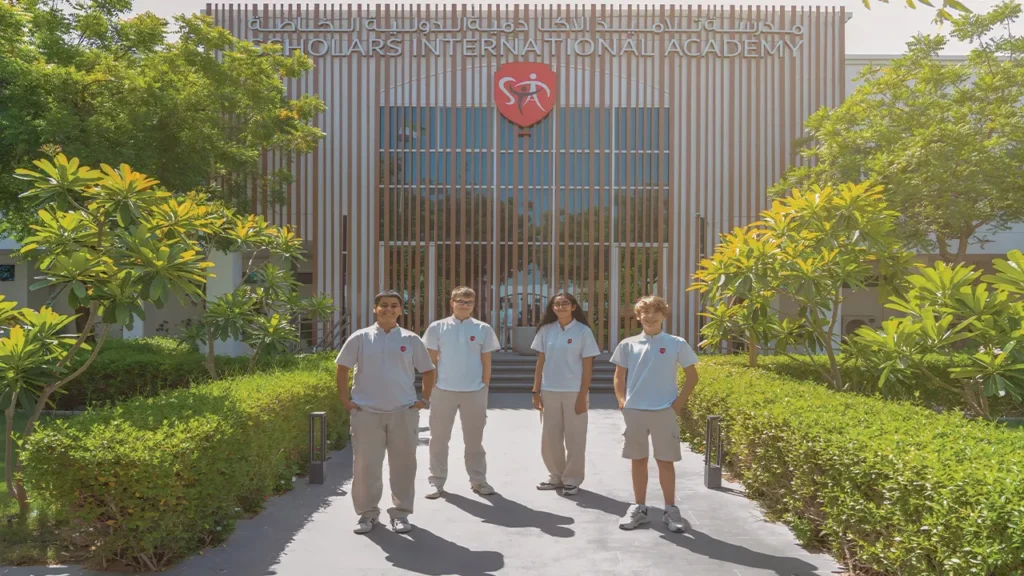
Choosing the right school is one of the most important decisions for parents who want the best academic and personal development for their children. In Sharjah, many families look for institutions that combine academic excellence, strong values, and a supportive learning environment. This is where Scholars International Academy Sharjah truly stands out as a leading educational institution offering quality learning and holistic growth. With a strong reputation, positive parent feedback, and a student-focused approach, Scholars International School Sharjah has become a preferred choice for families seeking international standards of education within the UAE. A Vision Focused on Academic Excellence A Curriculum Designed for Global Success One of the main reasons The International School in Sharjah stands out is its well-structured international curriculum. The school focuses on developing critical thinking, creativity, and problem-solving skills, ensuring students are well-prepared for higher education and global opportunities. The curriculum balances academics with extracurricular activities, allowing students to excel not only in the classroom but also in sports, arts, and leadership programs. This approach reflects the educational philosophy of Scholars School Sharjah, which prioritizes well-rounded development. Experienced and Dedicated Faculty Behind every successful school is a team of passionate educators. Scholars International School Sharjah employs highly qualified teachers with international experience who are committed to nurturing each student’s potential. Teachers focus on personalized learning, ensuring that individual strengths and areas for improvement are addressed effectively. A Supportive and Inclusive Learning Environment Student-Centered Education At Scholars International Academy Sharjah, students are encouraged to express themselves, ask questions, and actively participate in their learning journey. The school fosters a positive and inclusive environment where students feel safe, respected, and motivated to achieve their goals. This student-first philosophy is also a defining feature of Scholars Academy Sharjah, making it a trusted name among parents in the region. Modern Facilities and Resources The campus is equipped with modern classrooms, science and computer labs, libraries, and sports facilities. These resources enhance the learning experience and support innovative teaching methods. Many parents highlight these amenities in Scholars International Academy reviews, praising how they foster a high-quality educational environment. Positive feedback in Scholars International Academy reviews often emphasizes the state-of-the-art labs and engaging learning spaces that make students’ education both enjoyable and effective. Overall, the excellent facilities are frequently mentioned in Scholars International Academy reviews, reflecting the school’s commitment to providing a comprehensive and enriching experience for every student. Strong Focus on Character Building Values Beyond Academics Education at The International School in Sharjah goes beyond textbooks. The school emphasizes values such as respect, responsibility, teamwork, and integrity. Students are encouraged to become confident, ethical, and socially responsible individuals. This balanced approach ensures that graduates of Scholars International School Sharjah are not only academically strong but also prepared to contribute positively to society. Extracurricular Activities and Leadership Programs A wide range of extracurricular activities allows students to explore their interests and talents. From sports and arts to clubs and community initiatives, these programs play a vital role in building leadership and communication skills. Many Scholars International Academy reviews highlight how the school’s diverse activities encourage personal growth and creativity. Overall, parents often mention in Scholars International Academy reviews that these programs help students develop important life skills while enjoying a well-rounded educational experience. Strong Parent and Community Engagement Transparent Communication with Parents Parents value clear and consistent communication, and Scholars International Academy Sharjah excels in this area. Regular updates, parent-teacher meetings, and open communication channels help parents stay involved in their child’s education. This transparency is one of the reasons Scholars International School Sharjah continues to earn trust and positive feedback from families. Easy Admission Process The school offers a smooth and efficient enrollment process for new students. Parents can easily Apply Online, making the admissions procedure convenient and straightforward. By allowing families to Apply Online, the school removes unnecessary barriers and ensures a hassle-free start to their child’s education. Students and parents also enjoy the flexibility to Apply Online at any time, without needing to visit the campus in person. This modern, user-friendly approach demonstrates the school’s dedication to supporting families from the very first step, guiding them seamlessly until they are fully enrolled, and providing continuous assistance for those who Apply Online. Scholars School Sharjah Parents and students often look for schools with a strong reputation and positive feedback. Scholars School Sharjah has consistently received excellent reviews from its community, highlighting high-quality education, experienced teachers, and a supportive learning environment. These reviews build trust among new families considering enrollment, showing that the school not only maintains academic standards but also fosters holistic development. Reputation and Reviews That Build Trust Positive Feedback from Parents The growing number of positive Scholars International Academy reviews highlights the school’s commitment to quality education and student well-being. Parents often mention academic progress, caring teachers, and a welcoming environment as key strengths. Such feedback reinforces the strong reputation of Scholars International Academy Sharjah as a reliable and high-performing educational institution in Sharjah. A Recognized Name in Sharjah Over the years, Scholars School Sharjah and Scholars Academy Sharjah have become well-known for maintaining high educational standards. This recognition makes the academy a popular choice for both local and expatriate families. Scholars School Sharjah Parents and students often look for schools with a strong reputation and positive feedback. Scholars School Sharjah has consistently received excellent reviews from its community, highlighting high-quality education, experienced teachers, and a supportive learning environment. These reviews build trust among new families considering enrollment, showing that the school not only maintains academic standards but also fosters holistic student development. Scholars Academy Sharjah In addition, Scholars Academy Sharjah is known for offering innovative educational programs and advanced curricula that focus on developing students’ critical thinking and creativity. Its excellent reputation in Sharjah makes it a preferred choice for families seeking the best educational experience for their children. FAQ Which is the most popular school in Sharjah? Sharjah is home to many excellent schools, but The International School in Sharjah is considered one of the

Why Scholars International Academy Sharjah Stands Out Read More »
eyfs in sharjah

Understanding the 7 Areas of Learning in the EYFS Framework

Every activity in an Early Years classroom, from a sand tray to a story circle, is planned around the seven areas of learning in EYFS. The Early Years Foundation Stage framework groups a child’s development into three prime areas and four specific areas, and teachers use them to plan, observe and support each child between the ages of three and five. This guide explains what each area covers, how the areas connect, and what parents can expect to see at home as their child moves through FS1 and FS2. What the EYFS Framework Is The EYFS is the statutory framework for children from birth to five within the British curriculum. It sets out the learning and development goals, the assessment points and the welfare standards that Early Years settings follow. Instead of fixed subjects, it describes areas of development, because young children learn through play, conversation and repeated hands on experience rather than through timetabled lessons. Schools that follow the British curriculum apply the same framework across FS1 and FS2. At Scholars International Academy, the EYFS nursery at SIA (FS1 and FS2) is built on this structure, with the seven areas shaping how classrooms are set up and how each day flows. The Three Prime Areas The prime areas are the foundations. They develop first and fastest, and every other kind of learning depends on them. Communication and Language This area covers listening, attention, understanding and speaking. Children learn to follow instructions, ask questions, retell stories and take part in conversations. Story time, songs, role play and simple daily routines, such as talking about the weather or what is for snack, all build vocabulary and the confidence to use it. Personal, Social and Emotional Development Here children learn to manage feelings, build friendships, take turns and become more independent. Teachers model how to share, wait and solve small disagreements calmly. A settled child who feels safe in the classroom is far more willing to try new things, which is why this area is treated as the heart of the Early Years. Parents who want to see how this looks in practice can join a Stay and Play session and watch children interact in a real setting. Physical Development Physical development has two sides. Gross motor skills come from climbing, running, balancing and outdoor play. Fine motor skills come from threading, cutting, pouring and holding a pencil. Both matter for writing later on, since a child who cannot yet control small movements will find letter formation frustrating. The Four Specific Areas The specific areas build on the prime areas and introduce the knowledge and skills that lead directly into the National Curriculum in Year 1. Literacy Literacy in the EYFS means early reading and writing. Children begin with rhymes and sounds, move on to recognising letters and blending them into words, and then start writing simple words and captions. Many British curriculum schools, including SIA, use a structured phonics programme such as Read Write Inc from FS2 so that reading develops in a clear, predictable sequence. Mathematics Early mathematics is practical. Children count objects, compare sizes, sort by colour and shape, recognise numbers to 10 and then 20, and begin to understand patterns and simple addition through games. The goal is a deep understanding of number, not memorised sums. Understanding the World This area introduces science, geography, history and technology in an age appropriate way. Children explore nature, observe changes in weather and seasons, learn about their own families and community, and compare different ways of life. In the UAE, this often includes national celebrations, local culture and the environment around the school. Expressive Arts and Design Painting, music, dance, construction and imaginative play all sit here. Children experiment with colour, texture, sound and movement, and learn to share ideas through what they make. Expressive work also feeds the other areas, since a child describing a model they built is practising language and confidence at the same time. How the Seven Areas Work Together The areas are not taught separately. A single activity usually touches several at once. Building a bridge with blocks involves physical control, mathematical thinking about size and balance, language as children negotiate, and personal development as they cooperate. Teachers plan the environment and activities so that children meet all seven areas of learning in EYFS across the week, then observe and record what each child can do. These observations shape the next steps for every child. At the end of FS2, the Early Years Foundation Stage Profile records whether a child has reached the expected level in each area, which gives Year 1 teachers a clear picture of where to begin. Children who leave the stage able to listen, share, hold a pencil and recognise sounds are ready for the more formal learning that follows. What Parents Can Do at Home Supporting the seven areas does not require worksheets. Talking about the day, reading together every evening, counting steps on the stairs, cooking, drawing and outdoor play all contribute. Giving children small responsibilities, such as putting shoes away or helping to set the table, builds independence and confidence. For families with younger children, a nursery that follows the same framework, such as SIA Nursery, makes the move into FS1 much smoother because the routines and expectations are already familiar. FAQ What are the seven areas of learning in EYFS? Three prime areas: Communication and Language, Personal, Social and Emotional Development, and Physical Development. Four specific areas: Literacy, Mathematics, Understanding the World, and Expressive Arts and Design. What is the difference between prime and specific areas? Prime areas are the foundations of all learning and develop first. Specific areas build on them and introduce the skills and knowledge children need for Year 1. At what age does the EYFS apply? From birth to five. In schools this covers FS1 (ages 3 to 4) and FS2 (ages 4 to 5), after which children move to Year 1. Entry to FS1 follows the 31 December age rule for FS1,

Understanding the 7 Areas of Learning in the EYFS Framework Read More »

english as an additional language

EAL Support: How Schools Help Children Learning English

Starting school in a new language is one of the biggest changes a child can face. For children learning English as an additional language, every lesson asks them to understand new ideas and a new language at the same time. The right support turns that challenge into steady progress. This guide explains how children learn English at school, what good EAL support looks like in the classroom, and how parents can help at home. What Is English as an Additional Language (EAL)? The term describes children who speak one or more languages at home and are learning English at school. A child may speak Arabic, Hindi, Urdu or French fluently and still be at the very start of learning English. EAL is not a learning difficulty. These children already know how language works, and many are bilingual or multilingual, which is a real strength. What they need is time, structured support and teachers who plan lessons with language in mind. How Children Learn English at School The Stages of English Learning Progress is not a straight line, but most children move through recognisable stages. Many schools use a five stage scale, from new to English through to fluent. Stage What you may notice What helps most New to English Listens and copies, uses single words, may stay silent Pictures, gestures, routines and a friendly buddy Early acquisition Uses short phrases and simple questions Key words taught before the lesson, sentence starters Developing competence Joins discussions, writes short texts with errors Talk partners, models of good writing, targeted vocabulary Competent Follows most lessons but finds abstract language hard Help with subject vocabulary and longer texts Fluent Works at the same level as classmates Continued stretch and challenge Conversation Comes First, Academic Language Later Children often sound confident in the playground within a year or two. Academic English, the language of textbooks, exams and written explanations, takes much longer. Research by Jim Cummins is often cited for estimates of about two years for everyday conversation and five to seven years for academic language. Treat these as a guide, not a deadline. This is why a child who chats happily can still need help with reading or writing in Science or History. The Silent Period Many new learners say very little for the first weeks or months. This silent period is normal. Children are listening and absorbing the sounds and patterns of English, especially in the Early Years Foundation Stage, where children are still learning to talk in any language. Pressure to speak rarely helps. Warm routines, play and small group activities help children speak when they are ready. What Good EAL Support Looks Like in the Classroom Strong support sits inside everyday lessons rather than taking children away from them. Look for these features: Effective English as an additional language support is closely linked to good teaching for everyone. Our guide to classroom teaching methods to look for on a school tour shows what clear explanation, questioning and differentiation look like in practice. How Parents Can Help at Home English as an Additional Language Support at Scholars International Academy Scholars International Academy in Sharjah follows the British curriculum with English as the main language of instruction. Students come from over 60 nationalities, so many children are learning English alongside classmates who are doing the same. The school runs dedicated EAL programmes for children whose first language is not English. Small class sizes and personalised learning plans give each child the attention they need, and trained staff plan lessons so every learner can take part from the start. The Inclusion Department works with families and teachers when a child needs additional support, while pastoral care and counselling help children settle and feel they belong. Questions to Ask When Choosing a School for an EAL Learner A short visit shows how seriously a school takes language support. Our guide to choosing a British school in Sharjah covers the wider checklist. For an EAL learner, add these questions: Seeing a classroom in action answers most of these questions. You can book a tour at SIA and meet the team. Frequently Asked Questions What does EAL stand for in school? EAL stands for English as an additional language. It describes children who speak another language at home and are learning English at school. How long does it take a child to learn English at school? Most children manage everyday conversation within about two years, while academic English can take five to seven years. Age, previous schooling and exposure to English all affect the pace, so progress varies from child to child. Is EAL the same as special educational needs? No. Learning English is not a learning difficulty, and EAL support is separate from SEN support. Some children may need both, and a good school assesses each need on its own. Should we stop speaking our home language to help our child learn English? No. A strong home language supports learning in English. Keep speaking, reading and telling stories in the language you know best, and let school provide most of the English. Will my child fall behind while learning English? Not necessarily. Children can understand subject ideas before they can express them in English, so good schools teach vocabulary alongside content and check understanding in ways that do not depend only on language.

EAL Support: How Schools Help Children Learning English Read More »

Best Nursery Sharjah

Best Nursery Sharjah: Fostering Education and Care

Choosing the right nursery is one of the most important decisions parents make during their child’s early years. The best nursery Sharjah provides more than basic childcare; it offers a nurturing environment where education, emotional development, and safety work together to shape confident young learners. With the growing demand for high-quality early education, parents in the UAE are increasingly focused on finding nurseries that align with international standards and long-term academic goals. Why the Best Nursery Sharjah Matters for Early Childhood Development Early childhood is a critical stage in a child’s life. During these formative years, children develop essential cognitive, social, and emotional skills that influence their future learning journey. Enrolling a child in the best nursery Sharjah ensures exposure to structured learning experiences designed to encourage curiosity, independence, and creativity. Many parents prefer nurseries that are connected to reputable educational institutions such as Scholars International Academy, as this reflects consistency, quality, and a clear academic pathway. A strong nursery foundation can significantly ease a child’s transition into primary school and beyond. Curriculum Excellence in Leading Nurseries Early Years Foundation Stage Nursery Framework A defining feature of the best nursery Sharjah is the use of an internationally recognized curriculum. Many top nurseries follow the Early Years Foundation Stage nursery framework, which focuses on holistic child development. This approach supports learning through play, exploration, and guided activities that nurture communication skills, physical coordination, and emotional awareness. The Early Years Foundation Stage nursery curriculum prepares children academically and socially, ensuring they are ready for the expectations of primary education. Parents value this structured yet flexible system because it respects each child’s unique pace of learning. Qualified Educators and Personalized Learning High-quality nurseries employ experienced and well-trained educators who specialize in early childhood education. The best nursery Sharjah maintains low student-to-teacher ratios, allowing for personalized attention and tailored learning plans. Educators closely monitor each child’s progress, strengths, and areas for improvement, creating a supportive learning environment. Nurseries associated with institutions like Scholars International Academy often emphasize continuous professional development for teachers, ensuring that children benefit from modern teaching techniques and best practices. Safe, Supportive, and Stimulating Learning Environments Child Safety and Emotional Well-Being Safety is a top priority for any parent. The best nursery Sharjah invests heavily in secure facilities, trained staff, and child-friendly infrastructure. From controlled access points to hygienic classrooms and outdoor play areas, every detail is designed to protect children’s physical well-being. Equally important is emotional safety. Nurseries focus on building trusting relationships between teachers and children, helping young learners feel secure, confident, and supported throughout the day. Extracurricular Activities and Play-Based Learning Beyond academics, the best nursery Sharjah offers a wide range of extracurricular activities that support overall development. Music, art, storytelling, sensory play, and outdoor activities encourage creativity and social interaction. These experiences also help children develop teamwork, communication, and problem-solving skills. Such well-rounded exposure lays the groundwork for future success ina top school in Sharjah, where academic and extracurricular balance remains essential. Preparing Children for Long-Term Academic Success A significant advantage of choosing the best nursery Sharjah is its focus on long-term educational planning. Early learning environments that emphasize discipline, curiosity, and independence help children transition smoothly into primary education. Parents who plan often look for nurseries that are part of a broader educational ecosystem. Connections to institutions like Scholars International Academy provide continuity, allowing children to progress confidently through different educational stages and eventually into a top school in Sharjah. (FAQ) How do the best nurseries ensure child safety and well-being? The best nursery sharjah implements strict safety measures, including secure entry systems, trained staff, health protocols, and child-friendly facilities. Emotional well-being is supported through nurturing teacher-child relationships. At what age do children need to be to enroll in the best nurseries in Sharjah? Most nurseries accept children from around 6 months up to 4 years, depending on the program structure and curriculum. Do the nurseries in Sharjah offer any parent involvement programs? Yes, many nurseries encourage parental involvement through workshops, regular updates, parent-teacher meetings, and school events. Are there opportunities for children to participate in extracurricular activities at these nurseries? Absolutely. Activities such as art, music, physical play, and group learning are core elements of the Early Years Foundation Stage nursery approach. How can parents choose the right A Level school in Sharjah for their child? Parents should consider a clear educational pathway starting from nursery through secondary education, ideally connected to A Level school in Sharjah with strong academic credentials. A Strong Start for a Bright Future Selecting the best nursery Sharjah is an investment in a child’s future. With a focus on quality education, safety, emotional support, and internationally aligned curricula, these nurseries play a vital role in shaping confident and capable learners ready for future academic challenges. Begin your child’s educational journey by choosing the best nursery Sharjah that prioritizes care, learning, and long-term success. Explore nurseries associated with Scholars International Academy, recognized for academic excellence, and give your child the strongest possible foundation for a smooth transition into a top school in Sharjah and beyond.

Best Nursery Sharjah: Fostering Education and Care Read More »

social skills for kids

Social Skills for Kids: How Young Children Learn to Make Friends

Social skills for kids are the abilities children use to get along with others: taking turns, sharing, listening, joining a game, solving small conflicts and noticing how someone else feels. They develop fastest between the ages of 3 and 5, mostly through play with other children and warm conversations with adults. This guide explains what to expect at each age and how parents can help at home. What Are Social Skills? Social skills cover several connected abilities: Children do not learn these all at once. A child may be a confident talker but still find waiting very hard, and that is normal. Why Social Skills Matter in the Early Years In the British Early Years Foundation Stage, Personal, Social and Emotional Development is one of the three prime areas of learning, because so much else depends on it. By the end of FS2, the Early Learning Goal for Building Relationships expects children to: Children who can join a group, listen and manage their feelings also find it easier to settle in class and focus on learning. Social Skills for Kids by Age These examples draw on the developmental checklists published by the US Centers for Disease Control and Prevention: Age Stage What many children do 3 Nursery or starting FS1 Notices other children and joins them to play, calms down within about 10 minutes after a parent leaves 4 FS1 into FS2 Asks to play with other children, comforts a friend who is upset, pretends during play, likes to be a helper 5 End of FS2 Follows rules or takes turns in games, does simple jobs at home, sings, dances or acts for others Every child develops at their own pace. For a broader picture across language, thinking and movement, see our guide to child development milestones. Activities That Build Social Skills at Home You do not need special materials. Everyday play builds social skills for kids naturally: Sharing or Turn Taking? Young children often find sharing hard, because giving up a toy straight away feels like losing it. Turn taking is easier to learn: “You can have it for five minutes, then it’s Sara’s turn.” A visual timer helps. Praise the moment it works: “You waited for your turn. That was kind.” Supporting a Shy Child Some children are naturally quieter, and that is not a problem to fix. Shy children often watch first and join later. These steps help: Children learning English as an additional language may also be quiet at first while they listen and absorb the new language. Play is often how they make friends before they have many words. When to Ask for Advice Speak to your child’s teacher or doctor if, by around age 4 or 5, your child rarely shows interest in other children, finds it very hard to cope with any change in routine, or has frequent aggressive outbursts that do not improve with support. Early advice is always easier than catching up later. At SIA, the Inclusion team works with families and teachers when a child needs additional support. Social Skills at SIA At Scholars International Academy, the EYFS school in Sharjah programme covers FS1 and FS2 for children aged 3 to 5. Teachers combine free play, where children follow their own interests, with structured activities, where they learn to be part of a group. Strong, warm relationships with teachers help children understand their own feelings and those of others, make friendships and resolve conflicts peaceably. Families with older children can use the Siblings Club after school, where FS children wait for their brothers and sisters in a safe space and keep building their personal and social skills through extended play with other children. For younger children, the British nursery in Sharjah at SIA follows the EYFS curriculum with a focus on play, discovery and collaboration. Frequently Asked Questions At what age do children start making friends? Most children start playing alongside others by age 2 or 3, and many form real friendships between 3 and 4. Friendships become more stable by the end of FS2. How can I improve my child’s social skills at home? Play turn taking games, try short playdates, talk about feelings and model kind words yourself. Short, regular practice works better than one big social event. Is it normal for my 3 year old to prefer playing alone? Yes, some of the time. Many 3 year olds move between playing alone, playing alongside others and joining in. Look for growing interest in other children over the year. Do social skills for kids affect learning? Yes. Children who can listen, take turns and manage frustration settle more easily in class, which supports early reading, maths and confidence. To see how SIA’s Early Years classrooms build friendships through play, book a tour.

Social Skills for Kids: How Young Children Learn to Make Friends Read More »

Secondary Schools in Sharjah

How to Choose the Right Secondary School for Your Child in Sharjah

Choosing the right secondary schools in Sharjah is one of the most important decisions for parents seeking the best education and future opportunities for their children. Scholars International Academy offers an exceptional learning environment that combines academic excellence, character development, and global perspectives. As one of the leading British curriculum schools in Sharjah, the academy provides a strong foundation for students to excel academically, socially, and personally. For families seeking quality yet affordable options, Affordable British Schools in Sharjah, like Scholars International Academy, ensure that every student has access to world-class education without compromising on value. Why Secondary Schools in Sharjah Matter The secondary years are critical in shaping a student’s academic journey and preparing them for higher education. A reputable secondary school in Sharjah helps students: At Scholars International Academy, the secondary school experience in Sharjah is designed to foster both intellectual growth and personal development. With a curriculum tailored to international standards, students are well-prepared for global opportunities while staying connected to local culture and values. What to look for your child when choosing a Secoundry school Choosing the right secondary school starts with your child, not the school brochure. Think about their strengths, the subjects they enjoy, how they learn best, and where they want to go after Year 11, whether that’s Sixth Form, university or a specific career. Once you know what matters most to your family, comparing schools in Sharjah becomes much easier. When you shortlist schools, look beyond the name and focus on a few practical points: The best way to confirm a Sharjah school is the right fit is to visit, ask questions and see lessons in action. To see how a British curriculum programme works from Year 7 to Year 11, read more about our secondary school in Sharjah. Core Curriculum and Subjects Offered Scholars International Academy follows a comprehensive British curriculum school program in Sharjah that equips students with knowledge, skills, and critical thinking capabilities. Secondary schools in Sharjah curriculum include: This structured approach ensures that students of Affordable British Schools in Sharjah, like Scholars International Academy, receive a well-rounded education, preparing them for international examinations and higher studies. Learning Environment at Scholars International Academy At Scholars International Academy, the focus is on creating a stimulating and supportive learning environment. The secondary schools in Sharjah experience emphasize: The academy follows a high-performance learning school philosophy, ensuring students develop academic excellence while becoming confident, socially responsible individuals. With qualified educators and state-of-the-art facilities, students thrive in a safe and motivating atmosphere. Extracurricular Programs and Student Development Beyond academics, Scholars International Academy believes in holistic development. Our secondary school in Sharjah students enjoy: These activities complement the British Curriculum Schools in Sharjah approach, promoting teamwork, creativity, and personal growth. Students are encouraged to pursue their passions and discover new interests, making the school experience both enriching and enjoyable. Assessment and Academic Progress Assessment at Scholars International Academy ensures each student in our secondary schools in Sharjah meets high academic standards. The school combines: This system allows teachers to monitor progress, identify strengths and areas for improvement, and guide students toward academic excellence. With personalized support, every student is positioned to achieve their highest potential in exams and beyond. Why Choose Affordable British Schools in Sharjah? Not every parent can access premium education without considering the budget. Among the many schools Sharjah offers, affordable British schools in Sharjah, such as Scholars International Academy, provide high-quality education while keeping it accessible. Students benefit from: Choosing an Affordable British School in Sharjah ensures that financial considerations do not compromise the quality of education. Empowering Students for a Bright Future Choosing the right secondary school in Sharjah can define a student’s academic journey and career path. At Scholars International Academy, students gain access to a British Curriculum School in Sharjah program, a safe and motivating environment, and opportunities for personal and academic growth. With a focus on excellence, creativity, and global readiness, every student is prepared to succeed in higher education and future endeavors. By selecting Affordable British schools in Sharjah, families can ensure their children receive the highest quality education without compromise. Frequently Asked Questions (FAQ) What is the most popular school in Sharjah? The most popular schools in Sharjah include international and British curriculum institutions. Among Sharjah schools offering the British curriculum, Scholars International Academy is consistently recognized for academic excellence and holistic development. Is SIA Sharjah a good school? Yes. Scholars International Academy offers a strong curriculum, experienced teachers, and a supportive environment, making it one of the top choices for parents seeking quality education in Sharjah. Who is the topper of DPS Sharjah? Academic results vary each year. DPS Sharjah is renowned for its high-performing students, but many students from British curriculum schools in Sharjah also achieve top rankings in national and international examinations. What is the salary of a Teacher in Sharjah Indian School? Teacher salaries in Sharjah Indian Schools depend on experience, qualifications, and the specific institution. Competitive compensation is offered to ensure high-quality teaching standards. Enroll Today and Shape Your Child’s Future Your child’s bright future starts with the right secondary school in Sharjah. Scholars International Academy offers a world-class curriculum, personalized attention, and an inspiring environment that nurtures talent and builds confidence. Take the first step today—explore our programs and enroll your child to unlock a lifetime of opportunities, growth, and success!

How to Choose the Right Secondary School for Your Child in Sharjah Read More »

exam stress tips for students

Exam Stress Tips for Students: How Parents Can Help Teenagers

Some exam stress is normal and even useful: it sharpens focus and gets revision started. It becomes a problem when it stops a teenager sleeping, eating or concentrating. The exam stress tips for students in this guide cover the signs to watch for, the routines that help most, and how parents can support without adding pressure during IGCSE, AS and A Level seasons. What Exam Stress Looks Like Stress shows up differently in every young person. Common signs include: One or two of these in the week before an exam is common. A pattern that lasts for weeks, or gets worse after exams end, is a reason to talk to the school and your doctor. Why Exams Feel So High Stakes for Teenagers IGCSE results shape Sixth Form choices, and A Level grades shape university offers, so teenagers often feel that everything depends on one series. Most IGCSE and A Level papers fall in the May and June series, with mock exams earlier in the year, which means pressure builds over months rather than days. It helps to understand how results actually work. Our guide to the IGCSE grading system explains what each grade means, which often makes the numbers feel less frightening. Exam Stress Tips for Students When planning revision around the term dates, check the 2026–27 calendar alongside your school’s confirmed exam timetable and allow time for both study and rest. These are the habits that make the biggest difference for most learners: How Parents Can Help Without Adding Pressure Parents make a real difference, often through small, quiet actions: Sleep is the area parents can protect most directly. For age by age guidance, read our article on how much sleep a child needs. What Not to Say During Exam Season Well meant comments can raise pressure. Try to avoid: Swap them for questions that keep the focus on effort and routine: “What’s your plan for tomorrow?” or “What can I do to help this week?” When to Get Extra Support Speak to your child’s form tutor or the school’s learner well being team if stress is affecting their sleep, eating or attendance, if they talk about feeling hopeless, or if panic attacks happen before or during exams. Schools can arrange support, and where a learner has a diagnosed need, they can advise on whether access arrangements may apply. If you are worried about your child’s mental health, contact your family doctor as well. Early support is always easier than catching up later. Exam Preparation and Support at SIA At Scholars International Academy, the Secondary programme runs from Year 7 to Year 11 and leads to Cambridge IGCSE, with AS and A Levels and BTEC options in Sixth Form. Learners are given more autonomy as they move up, with a strong emphasis on advanced critical thinking skills. Families can read more about the IGCSE secondary school in Sharjah stage. The learner well being programme includes regular check ins, one to one sessions, social and emotional learning and mindfulness practice, and the school counsellor works closely with the pastoral team. Frequently Asked Questions How can students reduce exam stress quickly? Slow breathing, a short walk and breaking revision into one small next step all help in the moment. These exam stress tips for students work best alongside regular sleep and meals. Is exam stress normal? Yes. Most students feel some stress before exams, and a moderate amount can improve focus. It becomes a concern when it affects sleep, eating or daily life for weeks. How many hours a day should a student revise? It depends on the stage and the exam timetable. For many IGCSE students, two to four focused hours on a non school day, broken into short blocks, is realistic. What should I do if my teenager refuses to revise? Stay calm, ask what is getting in the way and help them plan one small task. If avoidance continues, talk to their teacher, as it is sometimes a sign of anxiety rather than laziness. To see how SIA supports learners through IGCSE and A Levels, book a tour of our Secondary school.

Exam Stress Tips for Students: How Parents Can Help Teenagers Read More »

International Primary School

Why Choosing an International Primary School Can Transform Your Child’s Future

An international primary school teaches children from about age 5 to 11 using an internationally recognised curriculum, in a community that brings together many nationalities, rather than following a single national system. The label is not regulated, so what matters is which curriculum a school follows and how well it teaches it. This guide explains what an international primary school is, how the main primary curricula compare and what to look for, with notes on how Scholars International Academy teaches the primary years. What Is an International Primary School? There is no single legal definition, but most international primary schools share four features: Because the term is used loosely, check the curriculum, the inspection rating and the accreditation, not the name. International Primary Curricula Compared Four frameworks are common in the UAE. They differ in structure and in how much freedom teachers have. Curriculum Age range How it works Typical features British National Curriculum 5 to 11 (Key Stages 1 and 2), after the Early Years Foundation Stage Subject based, with set learning objectives for each year Clear progression to IGCSE and A Level IPC Mostly 5 to 11, part of a wider family with early years and middle years programmes Thematic units that connect subjects Learning goals for subject, personal and international learning IB Primary Years Programme 3 to 12 Inquiry based, with six transdisciplinary themes First stage of the IB continuum, leading to the MYP and Diploma American curriculum Kindergarten to Grade 5, roughly 5 to 11 Grade based standards, often Common Core or state standards Leads to the US high school diploma No framework is better in every case. The right one depends on where your child will study next, how long you plan to stay in the UAE and how your child learns best. Why Choose an International Primary School? Enrolling your child in an international primary school opens doors to global learning opportunities. Students gain exposure to diverse cultures, languages, and teaching methods, preparing them to thrive in a rapidly changing world. At Scholars International Academy, our programs are designed to foster: The scholars international academy curriculum emphasizes both core subjects and holistic development, ensuring that every child becomes a confident, independent, and motivated learner. How Scholars International Academy Teaches the Primary Years Scholars International Academy follows the British curriculum, with core subjects in Mathematics, English and Science alongside Computing, Physical Education, Humanities, Arts and Music, and Design and Technology. Teaching is project based and child centred, so learners explore ideas through hands on activities and group work. You can read more about our British primary school in Sharjah years on the Primary Stage page. Assessment and Progress Monitoring In our international primary school, assessment is continuous and rigorous. We combine teacher-led assessments with standardized progress tests to monitor each child’s development. This ensures: The scholars international academy curriculum incorporates a variety of evaluation methods, including project assessments, quizzes, presentations, and written tests, maintaining a balanced approach to measuring progress. Extra-Curricular and Enrichment Programs At Scholars International Academy, we believe education extends beyond the classroom. Our international primary school offers numerous enrichment programs: These programs complement the scholars international academy curriculum, fostering well-rounded students who are confident, creative, and socially responsible. Preparing Global Learners at Scholars International Academy At Scholars International Academy, we ensure that every student of our international primary school is ready to take on global challenges. Through the scholars international academy curriculum and high performance learning schools approach, students develop:  Nurturing 21st Century Skills at Scholars International Academy At Scholars International Academy, we recognize that the primary years are crucial for laying the foundation of a child’s learning mindset. Our international primary school curriculum is designed to nurture curiosity, creativity, and critical thinking from an early age. Students engage in project-based, hands-on learning that encourages them to explore ideas, solve problems, and develop confidence in their abilities. Through the scholars international academy curriculum, children learn to collaborate, communicate effectively, and approach challenges with courage and resilience. Our high performance learning schools philosophy ensures that every student not only achieves academic excellence but also develops emotional intelligence and social skills. By combining structured lessons with opportunities for independent exploration, we empower students to take control of their learning journey, laying the groundwork for lifelong success and a strong international perspective.  Comprehensive Learning Environment for Global Learners Our international primary school provides a comprehensive learning environment that balances core academic skills with creative and practical experiences. At Scholars International Academy, students follow the scholars international academy curriculum, which covers core subjects like Mathematics, English, and Science, alongside enrichment programs in arts, music, physical education, and technology. This approach encourages curiosity, independent thinking, and collaboration among students. Teachers continuously assess and adapt lessons to meet the individual needs of each child, ensuring personalized growth. By offering opportunities for hands-on learning, cultural awareness, and community engagement, our high performance learning schools framework helps students develop into well-rounded, confident, and globally minded learners. The combination of rigorous academics and holistic development prepares every student to excel not only in school but also in life. Our focus is always on your child’s potential, preparing them to excel in secondary education and beyond. FAQ: Understanding International Primary Education What is an international primary school? A school for children aged about 5 to 11 that follows an internationally recognised curriculum, such as the British National Curriculum, IPC or the IB Primary Years Programme, in a multicultural community. What does IPC mean in school? IPC stands for International Primary Curriculum, a comprehensive framework that integrates academic, personal, and international learning goals to develop global-minded students. What is the international primary curriculum? The international primary curriculum focuses on holistic development, combining core subjects like Maths, English, and Science with creative, cultural, and social learning experiences. Is IPC the same as IB? No. IPC (International Primary Curriculum) focuses on structured primary education, whereas IB (International Baccalaureate) offers programs across primary, middle, and diploma levels with a global educational philosophy. Is IB better

Why Choosing an International Primary School Can Transform Your Child’s Future Read More »

career guidance for students

Career Guidance for Students: Choosing a Path After School

Career guidance for students helps young people choose subjects, qualifications and university courses using evidence about themselves and the world of work, not guesswork or pressure. Done well, it starts years before the final exams and takes the stress out of choosing after Year 11 and Year 13. This guide explains when to start, what good guidance includes, how to match subjects to careers and what to ask a school. What Career Guidance for Students Includes Good guidance is more than a talk before university applications. It usually covers six things: Students who see these steps early tend to make choices they can explain, which matters more than choosing the “right” career at 14. When to Start: A Stage by Stage Guide Career guidance for students works best when it grows with them. The focus changes at each stage. Stage Focus What parents can do Years 7 to 9 Explore interests and talk about the jobs people do Keep conversations open and avoid narrowing options too early Years 9 and 10 Choose IGCSE subjects Link subjects to possible paths and keep a balance of choices Year 11 Decide between A Levels, BTEC or a mix Compare how each route is assessed and where it leads Years 12 and 13 Research courses, universities and work experience Help with deadlines, requirements and the Ministry of Education equivalency certificate for UAE universities Our guides to IGCSE subject choices and BTEC and A Levels compared explain the two big decision points in more detail. How to Match Subjects to Careers Start with fields rather than job titles, because careers change and subjects open many doors. Then check the entry requirements of the courses your child might want. They vary by university and country, so always read the course page. Field Subjects courses usually look for Engineering Mathematics and Physics Computing Mathematics, often with Computer Science Business and economics Mathematics helps, but many courses are flexible Law and humanities Usually flexible, with strong essay subjects valued Art and design A portfolio alongside a relevant subject Keeping a balance of subjects at IGCSE and early A Level is the safest way to leave options open. Our guide to A Levels in the UAE explains subjects, grades and university pathways. What Good Career Guidance Looks Like in a School Parents can use a published framework as a checklist. The Gatsby Foundation’s Good Career Guidance report set out eight benchmarks for schools in England, which many British curriculum schools use as a reference. They are not a requirement in the UAE, but they show what a full programme includes: Good career guidance for students rarely depends on one event. It depends on doing several of these things consistently, as the Gatsby Foundation’s guidance explains. Questions to Ask a School About Careers Support Take these questions on every visit, alongside our list of questions to ask on a school tour. How Parents Can Support Career Guidance at Home Career Guidance at SIA Scholars International Academy’s Sixth Form programme offers Pearson Edexcel International A Levels and BTEC International Level 3 courses, so learners can choose an academic route, a practical route or a combination. The school has career counsellors who guide learners through university decisions, and enrichment includes internship programmes. These are the kinds of services parents can ask about when comparing schools. Families who want to see how guidance works in practice can book a campus tour and talk to the team about their child’s plans. Frequently Asked Questions At what age should career guidance start? Gentle exploration can begin around age 11 or 12. More focused guidance linked to subjects usually starts in Year 9, when IGCSE options are chosen. How can I help a child who does not know what they want? Start with interests and strengths, try small experiences such as clubs, projects or a day with a professional, and keep options open by choosing a balanced set of subjects. Is career guidance only for students going to university? No. It also covers practical qualifications such as BTEC, training routes and work, so every student can find a path that suits them. What is the difference between career guidance and university counselling? Career guidance covers the whole journey, from self knowledge and subject choices to work and study options. University counselling is one part of it, focused on courses and applications. Do UAE universities ask for anything special from British curriculum students? They usually ask for the Ministry of Education equivalency certificate, and our guide to UAE equivalency certificate requirements explains what it needs.

Career Guidance for Students: Choosing a Path After School Read More »

cbse vs british curriculum

CBSE vs British Curriculum: Which Is Right for Your Child?

Many families in Sharjah come from India or plan to study there, so the choice between an Indian CBSE school and a British curriculum school comes up often. Both are respected, both are widely available in the UAE, and both lead to good universities. They are built differently, though. This guide compares CBSE vs British curriculum on structure, teaching style, exams, subjects and university routes, so you can match the system to your child and your family plans. What Is the CBSE Curriculum? CBSE stands for the Central Board of Secondary Education, India’s national board. CBSE schools follow a syllabus set in India, with textbooks designed around the national framework. Learning is structured by class, from Class 1 to Class 12, and students sit national board examinations at the end of Class 10 and Class 12. The curriculum is strong in mathematics and science and is closely linked to the entrance exams used for Indian universities. In the UAE, CBSE schools usually run an academic year from April to March, following the Indian calendar, and offer Hindi, Arabic and other language options alongside English. What Is the British Curriculum? The British curriculum follows the National Curriculum for England. Children move through year groups from FS1 to Year 13, grouped into Key Stages. Students sit IGCSE examinations at the end of Year 11 and A Levels at the end of Year 13. Lessons are taught mainly in English, and the academic year runs from September to June, matching most UK and international universities. For a closer look at how this works day to day, see our page on the British curriculum at SIA. CBSE vs British Curriculum: Key Differences Area CBSE British curriculum Origin Indian national board National Curriculum for England Year structure Class 1 to Class 12 FS1 to Year 13, in Key Stages Main exams Class 10 and Class 12 board exams IGCSE (Year 11) and A Levels (Year 13) Teaching focus Strong syllabus, textbook based learning and a broad core of subjects Skills, inquiry and depth, with growing subject choice Subject choice Science, Commerce or Humanities streams in Classes 11 and 12 Wide IGCSE choice, then three or four specialist A Levels Academic year April to March September to June Typical university route Indian universities, plus many global options UK, UAE and international universities Teaching Style and Assessment CBSE learning follows a clear syllabus, and progress is measured through unit tests, internal assessment and the national board exams. Students build a strong foundation in mathematics, science and languages, and revision habits form early because exams carry real weight in Classes 10 and 12. The British curriculum places more emphasis on how children learn. Teachers use discussion, projects and problem solving, and students are assessed throughout the year before sitting external exams. Skills such as critical thinking, communication and independent research are built into lessons from the early years. Our guide to the difference between IGCSE and GCSE in the UAE explains how the secondary exams work. Subjects and Language Options CBSE students study English, a second language, mathematics, science and social science, with Hindi, Arabic or another language often added. In Classes 11 and 12, students pick a stream: Science, Commerce or Humanities. British curriculum students study English, mathematics and science as a core, alongside humanities, the arts, computing and languages. At IGCSE they choose from a wide range of subjects, and at A Level they narrow down to three or four. The path is flexible, and a student can mix sciences with arts or business subjects, which suits children who have not yet decided on a career. Arabic and Islamic Studies are taught in both systems as required by UAE law, and you can read how this works in our guide to Arabic and Islamic Studies in British curriculum schools. University and Career Pathways The route a student takes after school is often the deciding factor. CBSE leads naturally to Indian universities and to national entrance exams for fields such as engineering, medicine and law, and CBSE results are also accepted by many universities abroad. Students from the British route can also apply to many Indian universities, usually after an equivalence check, so confirm the requirements of your target university early. IGCSE and A Levels are recognised by universities in the UK, the UAE, Europe, North America, Australia and Asia. Students who want flexibility to study in several countries often choose the British pathway. Some families also move between systems, and our overview of the equivalency certificate in the UAE explains how the paperwork works when a child changes curriculum. Moving Between CBSE and British Schools Switching is possible, but timing matters. The easiest points to change are at the start of primary school or at the start of secondary school. Moving in the middle of exam preparation, such as Class 9 to 10 or Year 10 to 11, is harder because syllabuses and exam boards differ. If you are thinking about a move, speak to the admissions team early and share recent reports so they can recommend the right year group. Our step by step guide to British school admissions in Sharjah shows what to prepare. If your child is in a CBSE school now, the SIA admissions team can review recent reports, suggest the right year group and plan a smooth start, ideally at the beginning of primary or secondary school. Read the SIA admissions procedure to see the steps, then arrange a visit so your child can meet the teachers before the move. Why Many Families Choose SIA for the British Curriculum Scholars International Academy in Sharjah follows the British National Curriculum from FS1 to Sixth Form. SIA holds World Class School status through the High Performance Learning framework and is endorsed by both British Schools Overseas (BSO) and the British Schools of the Middle East (BSME). Most form teachers come from the UK or Ireland. At Post Sixteen, SIA recorded a GL Value Added score of 7.3, which is nearly four times

CBSE vs British Curriculum: Which Is Right for Your Child? Read More »