
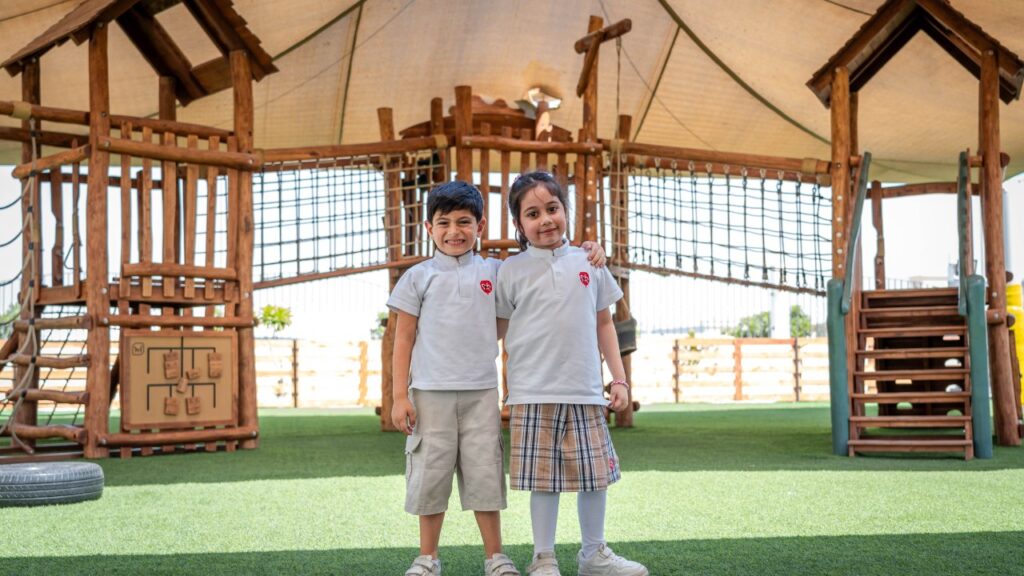
Child development milestones are the skills most children reach by a certain age, such as speaking in sentences, hopping on one foot or taking turns in a game. Between ages 3 and 5, children change faster than at almost any other time, so parents often wonder what is typical. This guide sets out the main milestones at 3, 4 and 5, how they link to the British Early Years curriculum and when it is worth asking for advice.
What Are Developmental Milestones?
Milestones are grouped into four areas:
- Social and emotional: playing with others, managing feelings, following simple rules
- Language and communication: understanding, speaking and holding a conversation
- Cognitive: learning, thinking, remembering and solving problems
- Movement and physical: running, climbing, drawing, dressing and using small tools
In 2022, the US Centers for Disease Control and Prevention (CDC) and the American Academy of Pediatrics updated their checklists, so each milestone now describes what at least three quarters of children can do by that age. That makes them a useful guide, but not a deadline.
Milestones at Age 3
By around age 3, many children:
- notice other children and join them to play
- calm down within about 10 minutes after a parent leaves, for example at nursery drop off
- hold a conversation with at least two back and forth exchanges
- ask “who”, “what”, “where” or “why” questions
- say their first name when asked, and talk clearly enough for others to understand most of the time
- draw a circle when shown how
- string large beads, put on some clothes by themselves and use a fork
Milestones at Age 4
By around age 4, many children:
- pretend during play, for example being a teacher, a superhero or a pet
- ask to play with other children and comfort a friend who is hurt or sad
- speak in sentences of four or more words and talk about something that happened in their day
- name a few colours and say what comes next in a well known story
- draw a person with three or more body parts
- catch a large ball most of the time and hold a crayon between fingers and thumb, not in a fist
Friendships and play become much richer at this age, which our guide to social skills for kids explores in more detail.
Milestones at Age 5
By around age 5, many children:
- follow rules or take turns when playing games with other children
- tell a story with at least two events and answer simple questions about a book
- keep a conversation going with more than three back and forth exchanges
- count to 10 and name some numbers between 1 and 5
- write some letters of their name and name some letters when shown
- pay attention for 5 to 10 minutes during an activity such as story time
- button some buttons and hop on one foot
Child Development Milestones and the EYFS
In the British curriculum, children aged 3 to 5 follow the Early Years Foundation Stage. Teachers observe how each child is developing across seven areas of learning, which are explained in our guide to the EYFS in Sharjah.
At the end of FS2, each child is assessed against the Early Learning Goals. These cover the same ground as the milestones above, from speaking in full sentences and forming friendships to counting confidently and holding a pencil effectively. They help teachers and parents plan the move into Year 1.
How to Support Development at Home
Most progress comes from ordinary daily life:
- Talk and read every day. Describe what you are doing, ask open questions and share books, rhymes and songs.
- Play together. Building, pretend play and simple board games support thinking, language and social skills at once.
- Get moving outdoors. Running, climbing, balancing and ball games build strength and coordination.
- Let them do it themselves. Dressing, pouring and tidying build independence and fine motor control.
- Limit screens. Time spent talking and playing does more for young children’s language than any app.
When to Ask for Advice
Every child develops at their own pace, and many children are ahead in one area and behind in another. Speak to your child’s teacher or doctor if your child:
- is not meeting several milestones for their age
- has lost skills they once had, such as words they used to say
- rarely shows interest in playing with other children
- is very hard for unfamiliar adults to understand by age 4
Your doctor can carry out a developmental check and, if needed, refer you to a specialist such as a speech and language therapist. Acting early is never wasted: if there is a difficulty, support works best when it starts young.
Schools can help too. At SIA, the Inclusion Department works with families when a child needs extra support, and an Individual Education Plan is created where a learner has an identified need.
Child Development Milestones at SIA
At Scholars International Academy, the EYFS school in Sharjah programme covers FS1 (ages 3 to 4) and FS2 (ages 4 to 5). Teachers focus on three prime areas: Communication and Language; Personal, Social and Emotional Development; and Physical Development.
Four specific areas, Literacy, Mathematics, Understanding the World and Expressive Arts and Design, build on that foundation. Learning happens through a mix of free play and structured activities, with field trips to parks, libraries and museums widening children’s experience of the world.
If you are planning when your child should start, our guide to school starting age in Sharjah explains the age rules.
Frequently Asked Questions
What are the main child development milestones at age 4?
Many 4 year olds speak in sentences of four or more words, play pretend, ask to play with other children, draw a person with three body parts and catch a large ball.
Should I worry if my child misses a milestone?
Not necessarily. Children develop unevenly, and one missed milestone is common. Talk to your doctor if your child misses several, loses skills or you feel something is not right.
What should a 5 year old know before Year 1?
Many children can count to 10, recognise some letters, write part of their name, take turns in games and listen to a story for several minutes.
Do boys and girls reach milestones at different ages?
There can be small differences on average, but the range within each group is much larger. Focus on your own child’s progress over time.
To see how SIA’s Early Years teachers support every stage of development, book a tour.